


Main
Acting as intercellular signals, Wnt proteins regulate the proliferation of cells. Wnt signals are active in numerous contexts, initially in early development and later during the growth and maintenance of various tissues. In comparison to other growth factors, Wnt signals have several unique properties, including a short range of action. Thereby, Wnts predominantly mediate signaling locally, between neighboring cells. In addition, Wnt signals give shape to tissues as cells are proliferating. This is a consequence of the ability of Wnt signaling to confer polarity and asymmetry to cells. Wnt proteins are highly conserved in evolution and are active in every branch of the animal kingdom. Wnt signaling is often implicated in stem cell control, as a proliferative and self-renewal signal. Mutations in Wnt genes or Wnt pathway components lead to specific developmental defects, while various human diseases, including cancer, are caused by abnormal Wnt signaling.
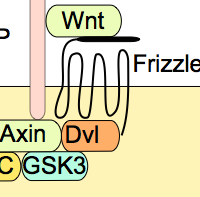
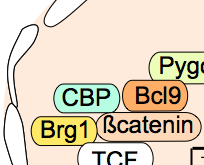
Insights into the mechanisms of Wnt action have emerged from several systems: genetics in Drosophila and Caenorhabditis elegans; biochemistry in cell culture and ectopic gene expression in Xenopus embryos. As currently understood, Wnt proteins bind to receptors of the Frizzled and LRP families on the cell surface. Through several cytoplasmic relay components, the signal is transduced to ß-catenin, which enters the nucleus and forms a complex with TCF to activate transcription of Wnt target genes. This
website serves as a resource for members of the Wnt community,
providing information on progress in the field, maps on signaling
pathways, and methods. The page on reagents lists many resources generously made available to and by the Wnt community. Wnt signaling is discussed in many reviews, listed here. Here some reviews on the history of the field. |
Wnt signaling components
Wnt proteins and genes | Frizzled, SFRP | Dishevelled/Dvl |
| ||
TCF |
|
|
| ||
| Axin | Other genes |
Wnt Target genes | Diseases/Other systems |
|
|
Diagrams of Wnt signaling events
Wnt signaling (overview) |
|
|
|
|
|

Have a question about Wnt? Consult the Wnt community on LinkedIn®!
