 |
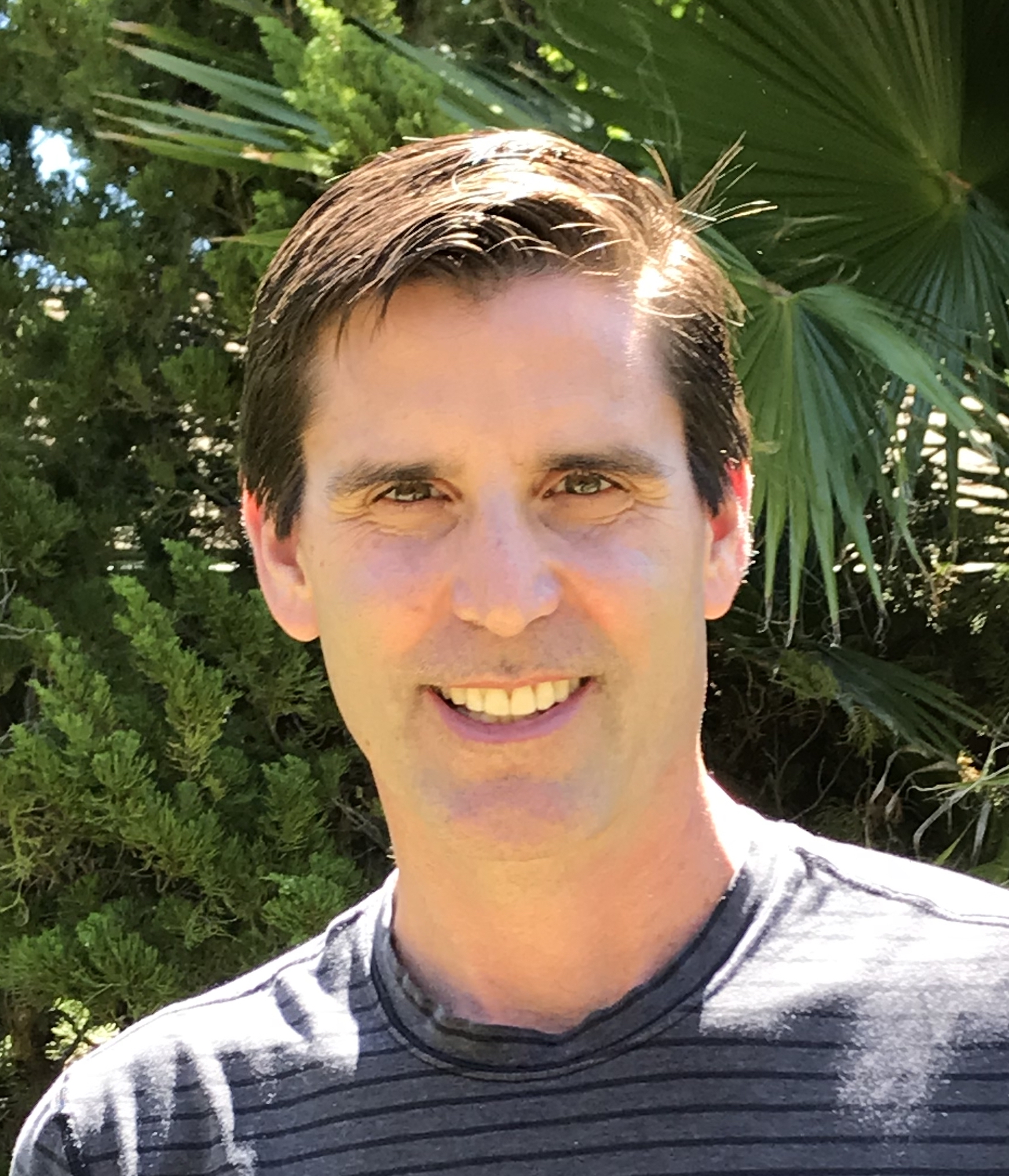
Mark Z. Jacobson
Professor of Civil and Environmental Engineering
Director, Atmosphere/Energy Program
Senior Fellow, Woods Institute for the Environment
Senior Fellow, Precourt Institute for Energy
Co-Founder, The Solutions Project, 100.org, and the 100% Clean, Renewable Energy Movement
ATMOSPHERE/ENERGY BS/MS/PhD PROGRAM
2023 PUBLIC ONLINE COURSE, "Clean, Renewable Energy and Storage for a Sustainable Future"
2023 BOOK, "No Miracles Needed: How Today's Technology Can Save Our Climate and Clean Our Air"
2020 BOOK, "100% Clean, Renewable Energy and Storage for Everything"
|
Department of Civil and Environmental Engineering
The Jerry Yang and Akiko Yamazaki Environment and Energy (Y2E2) Building
473 Via Ortega, Room 397
Stanford University
Stanford, CA 94305, USA
Tel: (650) 723-6836
Fax: (650) 723-7058
Email: jacobson@stanford.edu
Twitter:
B.S. Civil Engineering, B.A. Economics, and M.S. Environmental Engineering (1988) Stanford University
M.S. (1991) and Ph.D. (1994) Atmospheric Science, University of California at Los Angeles
Full Curriculum Vitae (CV)
Scientific Background
Mark Z. Jacobson’s career has focused on better understanding air pollution and global warming problems and developing large-scale clean, renewable energy solutions to them. Toward that end, he has developed and applied three-dimensional (3-D) atmosphere-biosphere-ocean computer models and solvers to simulate and understand air pollution, weather, climate, and renewable energy systems. He has also developed roadmaps to transition countries, states, cities, and towns to 100% clean, renewable energy for all purposes and computer models to examine grid stability in the presence of 100% renewable energy. Jacobson has been a professor at Stanford University since 1994. His research crosses two fields: Atmospheric Sciences and Energy, each discussed next.
Atmospheric Sciences
Jacobson started computer modeling in 1990. He developed over 85% of the computer code for the world’s first 3-D urban air pollution model coupled, with feedback, to meteorology. He then developed the first coupled 3-D global air pollution-weather-climate model and first unified nested global-through-urban air pollution-weather-climate model, GATOR-GCMOM. Zhang (2008) calls Jacobson’s unified model "the first fully-coupled online model in the history that accounts for all major feedbacks among major atmospheric processes based on first principles." Many features in GATOR-GCMOM are now mainstream in other models worldwide. For these models, he coded the worlds fastest (at the time) ordinary differential equation solver in a 3-D model for a given level of accuracy (SMVGEAR). He also developed solvers for aerosol and cloud coagulation, breakup, condensation/evaporation, freezing, dissolution, chemical equilibrium, and lightning; air-sea exchange; ocean chemistry; greenhouse gas radiation absorption; and land-surface processes. Thousands of researchers have used computer codes he has developed.
In 2000 and 2001, Jacobson applied his model to discover that black carbon, the main component of soot air pollution particles, may be the second-leading cause of global warming in terms of radiative forcing, after carbon dioxide. Several subsequent studies, including the highly-cited review by Bond et al. (2013), confirmed his finding.
Jacobson’s finding about black carbon’s climate effects resulted in his invitation to testify to the U.S. House of Representatives in 2007 and formed the original scientific basis for several proposed laws and policies. These included U.S. Senate Report 110-489 (Black Carbon Research Bill of 2008), U.S. House Bill 7250 (Arctic Climate Preservation Act of 2008), U.S. House Bill 1760 (Black Carbon Emissions Reduction Act of 2009), U.S. Senate Bill 849 (2009 Bill for the U.S. EPA to research black carbon), U.S. Senate Bill 3973 (Diesel Emission Reduction Act of 2010), European Parliament Resolution B7-0474/2011 (Resolution calling for black carbon controls on climate grounds), the 2012 multi-country Climate and Clean Air Coalition to Reduce Short-Lived Climate Pollutants, led by Hilary Clinton, California Senate Bill 1383 (2016 Bill to reduce black carbon), and California’s 2002 rule to not allow diesel vehicles to have higher particle emissions than gasoline vehicles.
For his black carbon discovery and modeling, Jacobson received the 2005 American Meteorological Society Henry G. Houghton Award, given for his "significant contributions to modeling aerosol chemistry and to understanding the role of soot and other carbon particles on climate" and a 2013 American Geophysical Union Ascent Award for "his dominating role in the development of models to identify the role of black carbon in climate change."
Jacobson’s 2008 and 2010 findings that carbon dioxide domes over cities have enhanced air pollution mortality through its feedback to particles and ozone resulted in another invitation for him to testify in the U.S. House of Representatives in 2008 and to testify twice in U.S. Environmental Protection Agency (EPA) hearings. In the first EPA hearing he was called as the State of California’s only expert witness to testify on how carbon dioxide can damage health locally by increasing temperatures and water vapor. This testimony served as a direct scientific basis for the EPA’s 2009 approval of the first regulation in U.S. history of carbon dioxide (the California waiver).
Energy
With respect to energy, in 2001 Jacobson published a paper in Science examining the ability of the U.S. to convert a large fraction of its energy to wind. In 2005, his group developed the first world wind map based on data alone. His students and he subsequently published on the impacts of hydrogen fuel cell vehicles on air quality and climate, on reducing the variability of wind energy by interconnecting wind farms; on integrating solar, wind, geothermal, and hydroelectric power into the grid; on integrating offshore wind and wave power; on comparing ethanol with gasoline; and on mapping U.S. offshore wind resources.
In 2008, he carried out a review of proposed energy technologies to address air pollution, global warming, and energy security, concluding that wind-water-solar (WWS) technologies resulted in the greatest benefits. In 2009, he coauthored a plan, featured on the cover of Scientific American, to determine if powering the world for all purposes with WWS was possible. In 2010, he was invited to participate in a TED debate. From 2010-2012, he served on the Energy Efficiency and Renewables advisory committee to the U.S. Secretary of Energy. In 2011, he cofounded The Solutions Project non-profit, which combined science, business, culture, and community, to educate people about science-based 100% clean, renewable energy roadmaps for 100% of the people.
In 2013, 2014, and 2016, he and his students developed roadmaps to transition New York, California, and Washington State, respectively, to 100% WWS. Jacobson’s New York energy roadmap resulted in an invitation for him to appear on the Late Show with David Letterman on October 9, 2013. Jacobson was then asked by the New York governor’s office to provide more information about a possible transition of New York to 100% WWS. In 2016, the governor proposed and passed a 50% renewable law (the New York Clean Energy Standard). Also in 2016, and in 2018, the New York Senate proposed New York Senate Bills S5527 and S5908A, respectively, for the state to go to 100% renewable electricity. The texts of both bills state, "This bill builds upon the Jacobson wind, water and solar (WWS) study." In 2019, New York State implemented Jacobson’s goal for the electricity sector by passing a law to go to 100% renewable electricity.
Similarly, on October 27, 2014, after the publication of Jacobson’s California WWS roadmap, the California governor’s office invited Jacobson to meet with the governor’s policy advisors to discuss the roadmap. In January, 2015, the governor proposed and, shortly after, obtained passage of a law (SB 350) for California to move to 50% renewable electricity. In 2018, this law was updated for the state to go to 100% renewable electricity (SB 100).
In 2015, Jacobson and his group published WWS plans for all 50 states and a continental-U.S.-wide grid study assuming 100% WWS. The grid paper earned Jacobson and his coauthors a 2016 Cozzarelli Prize from the Proceedings of the National Academy of Sciences, given for "outstanding scientific excellence and originality." The plans and grid study were updated for the 50 U.S. states and individual U.S. regions in 2022. The publication of these roadmaps, together with their dissemination by the Solutions Project and dozens of other nonprofits, resulted in the widespread awareness of Jacobson’s plans and the growth of the 100% renewable energy movement. Jacobson’s science-based plans resulted in all three Democratic presidential candidates for the 2016 election making 100% renewable energy part of their platform. Senator Sanders included Jacobson’s roadmaps on his web site and, after the election, wrote an op-ed with Jacobson in the Guardian calling for a transition to 100% renewables.
To date, activists inspired by Jacobson’s plans have encouraged 17 U.S. states (CA, CT, HI, IL, ME, MN, NC, NE, NJ, NM, NV, NY, OR, RI, VA, WA, WI), the District of Columbia, and Puerto Rico to pass laws or Executive Orders requiring a transition of up to 100% clean, renewable electricity. At the federal level, eight laws and resolutions were proposed calling for the U.S. to move to 100% renewable electricity or all energy. These included House Resolution 540 (2015), House Bill 3314 (2017), House Bill 3671 (2017), House Bill 330 (2019); Senate Resolution 632 (2019), Senate Bill 987 (2019), House Resolution 109 (2019), and Senate Resolution 59 (2019). All were inspired by Jacobson’s plans. For example, the first, House Resolution 540, states: "Whereas a Stanford University study concludes that the United States energy supply could be based entirely on renewable energy by the year 2050 using current technologies."
House Resolution 109 and Senate Resolution 59 are the proposed U.S. Green New Deal. As stated by Dr. Marshall Shepherd, "Professor Mark Jacobson at Stanford University has been a longtime leader in climate science and renewable energy transition. Many of the assumptions in the Green New Deal seem to be anchored in his scholarship." The main goals of the Green New Deal, to transition the U.S. to 100% renewable energy by 2030, came from Jacobson and Delucchi’s 2009 Scientific American paper.
In 2009 and 2011, Jacobson developed plans to transition the world to 100% WWS. In 2017-2018, he developed more detailed plans and grid studies for 139 individual countries. These were updated for 143 countries in 2019 and 145 countries in 2022. To date, 61 countries have enacted policies calling for 100% renewable electricity.
The Sierra Club supported the Jacobson roadmaps, and in 2013, asked him to help with a campaign to encourage cities around America to adopt 100% WWS laws. Ultimately, he and his students published plans for 53 towns and cities (2018) and 74 metropolitan areas (2020). To date, about 160 U.S. cities and over 400 cities worldwide have enacted policies to transition to 100% renewable electricity. Also, over 400 international companies have committed to 100% renewables in their global operations. In 2023, Jacobson served as an expert witness on behalf of 16 youth plaintiffs in the first climate case in U.S. history, Held v. Montana, to discuss the ability of Montana to transition to WWS. The plaintiffs prevailed.
For his research and leadership in Energy, Jacobson received the 2013 Global Green Policy Design Award for the "design of analysis and policy framework to envision a future powered by renewable energy." In 2016, he received a Cozzarelli Prize. In 2018, he received the Judi Friedman Lifetime Achievement Award "For a distinguished career dedicated to finding solutions to large-scale air pollution and climate problems." In 2019 and 2022, he was selected as "one of the world’s 100 most influential people in climate policy" by Apolitical. In 2022, he was recognized as "World Visionary CleanTech Influencer of the Year" by the CleanTech Business Club. In 2023, he was named one of the top 100 people globally "who have made an impact on the world this year" among "innovators across various industries, including art, entertainment, business, and philanthropy," by Worth magazine
Additional Work and Impact
To date, Jacobson has published about 180 peer-reviewed journal articles and given (since 1994) ~750 invited talks. In 2004, he founded and has ever since directed the Atmosphere/Energy Program at Stanford. Jacobson has written six textbooks, including Fundamentals of Atmospheric Modeling (1999) and Atmospheric Pollution: History, Science, and Regulation (2002). These two books, plus second editions in 2005 and 2012, respectively, relate primarily to his work in Atmospheric Sciences. The last two, 100% Clean, Renewable Energy and Storage for Everything (2020) and No Miracles Needed (2023), relate to his work in Energy.
Based on the impact of his research through citations to papers, Jacobson is ranked as the most impactful scientist in the world in the field of Meteorology & Atmospheric Sciences among those with their first publication past 1985. Among scientists publishing in any year from 1788 to 2021, he is ranked #12 in that field. In the Energy field, he is ranked #6 among those with their first publication past 1980 and #16 among those with their first publication in any year. He is also ranked #1,843 among all fields, among all 10 million scientists in history.
Books:
New Book: No Miracles Needed (2022)

100% Clean, Renewable Energy and Storage for Everything (2020)

Air Pollution and Global Warming: History, Science, and Solutions (2012)
Atmospheric Pollution: History, Science, and Regulation (2002)

Fundamentals of Atmospheric Modeling, 2d ed. (2005)
Fundamentals of Atmospheric Modeling (1999)
Some papers organized by topic (please see Curriculum Vitae for full list)
- Roadmaps for transitioning the world, countries, states, cities, and towns to 100% clean, renewable wind, water, and sunlight (WWS) in all energy sectors
- A path to sustainable energy by 2030 (Scientific American, 2009)
- Providing all global energy with wind, water, and solar power, Part I: Technologies, energy resources, quantities and areas of infrastructure, and materials (Energy Policy, 2011)
- Providing all global energy with wind, water, and solar power, Part II: Reliability, System and Transmission Costs, and Policies (Energy Policy, 2011)
- Examining the feasibility of converting New York State’s all-purpose energy infrastructure to one using wind, water, and sunlight (Energy Policy, 2013)
- A roadmap for repowering California for all purposes with wind, water, and sunlight(Energy, 2014)
- 100% clean and renewable wind, water, sunlight (WWS) all-sector energy roadmaps for the 50 United States (Energy & Environmental Sciences, 2015)
- A 100% wind, water, sunlight (WWS) all-sector energy plan for Washington State (Renewable Energy, 2016)
- 100% clean and renewable wind, water, and sunlight (WWS) all-sector energy roadmaps for 139 countries of the world (Joule, 2017)
- Impacts of Green-New-Deal energy plans on grid stability, costs, jobs, health, and climate in 143 countries (One Earth, 2019)
- 100% clean and renewable wind, water, and sunlight (WWS) all-sector energy roadmaps for 53 towns and cities in North America (Sustainable Cities and Society, 2018)
- Transitioning all energy in 74 metropolitan areas, including 30 megacities, to 100% clean and renewable wind, water, and sunlight (WWS) (Energies, 2020)
- Optimizing solar and battery storage for container farming in a remote Arctic microgrid (Energies, 2020)
- WWS and storage to help operate expeditionary contingency bases and remote communities (J. Defense Modeling and Simulation, 2021)
- Zero air pollution and zero carbon from all energy at low cost and without blackouts in variable weather throughout the U.S. with 100% wind-water-solar and storage (Renewable Energy, 2022)
- Low-cost solutions to global warming, air pollution, and energy insecurity for 145 countries (Energy and Environmental Sciences, 2022)
- On the history and future of 100% renewable energy systems research (IEEE Access, 2022)
- Studies on grid reliability with up to 100% penetration of WWS
- Low-cost solutions to global warming, air pollution, and energy insecurity for 145 countries (Energy and Environmental Sciences, 2022)
- Zero air pollution and zero carbon from all energy at low cost and without blackouts in variable weather throughout the U.S. with 100% wind-water-solar and storage (Renewable Energy, 2022)
- The cost of grid stability with 100% clean, renewable energy for all purposes when countries are isolated versus interconnected (Renewable Energy, 2021)
- On the correlation between building heat demand and wind energy supply and how it helps to avoid blackouts (Smart Energy, 2021)
- Impacts of Green-New-Deal energy plans on grid stability, costs, jobs, health, and climate in 143 countries (One Earth, 2019)
- Matching demand with supply at low cost among 139 countries within 20 world regions with 100% intermittent wind, water, and sunlight (WWS) for all purposes (Renewable Energy, 2018)
- A low-cost solution to the grid reliability problem with 100% penetration of intermittent wind, water, and solar for all purposes (Proc. Natl. Acad. Sci., 2015)
- Development of a tool for optimizing solar and battery storage for container farming in a remote Arctic microgrid (Energies, 2020)
- Optimizing investments in coupled offshore wind-electrolytic hydrogen storage systems in Denmark (J. Power Sources, 2017)
- Flexibility mechanisms and pathways to a highly renewable U.S. electricity future (Energy, 2016)
- Temporal and spatial tradeoffs in power system modeling with assumptions about storage: An application of the POWER model (Energy, 2016)
- Features of a fully renewable U.S. electricity-system: Optimized mixes of wind and solar PV and transmission grid extensions (Energy, 2014)
- Variability and uncertainty of wind power in the California electric power system (Wind Energy, 2014)
- The carbon abatement potential of high penetration intermittent renewables (Energy & Environmental Sciences, 2012)
- Effects of aggregating electric load in the United States (Energy Policy, 2012)
- The carbon abatement potential of high penetration intermittent renewables (Energy & Environmental Sciences, 2012)
- The potential of intermittent renewables to meet electric power demand: A review of current analytical techniques (Proceedings of the IEEE, 2012)
- A Monte Carlo approach to generator portfolio planning and carbon emissions assessments of systems with large penetrations of variable renewables (Renewable Energy, 2011)
- Reducing offshore transmission requirements by combining offshore wind and wave farms (IEEE Journal of Ocean Engineering, 2011)
- Power output variations of co-located offshore wind turbines and wave energy converters in California (Renewable Energy, 2010)
- Supplying baseload power and reducing transmission requirements by interconnecting wind farms (J. Applied Meteorology & Climatology, 2007)
- Impacts of green hydrogen for steel, ammonia, and long-distance transport on the cost of meeting electricity, heat, cold, and hydrogen demandin 145 countries running on 100% WWS (Smart Energy, 2023)
- Batteries or hydrogen or both for grid electricity storage upon full electrification of 145 countries with wind-water solar? (iScience, 2024)
- Studies examining impacts of electricity and transportation fuels on climate, health, and energy security
- Review of solutions to global warming, air pollution, and energy security (Energy & Environmental Science, 2009)
- Exploiting wind versus coal (Science, 2001)
- The effect on photochemical smog of converting the U.S. fleet of gasoline vehicles to modern diesel vehicles (Geophys. Res. Letters, 2004)
- Cleaning the air and improving health with hydrogen fuel cell vehicles (Science, 2005)
- Switching to a U.S. hydrogen fuel cell vehicle fleet: The resultant change in emissions, energy use, and global warming gases (J. Power Sources, 2005)
- Effects of ethanol (E85) versus gasoline vehicles on cancer and mortality in the United States (Environ. Sci. Technol, 2007)
- Effects of wind-powered hydrogen fuel cell vehicles on stratospheric ozone and global climate (Geophys. Res. Letters, 2008)
- Examining the temperature dependence of ethanol (E85) versus gasoline emissions on air pollution with a largely-explicit chemical mechanism (Atmospheric Environment, 2010)
- Examining the impacts of ethanol (E85) versus gasoline photochemical production of smog in a fog using near-explicit gas- and aqueous-chemistry mechanisms (Environ. Res. Letters, 2012)
- Worldwide health effects of the Fukushima Daiichi nuclear accident (Energy & Environmental Science, 2012)
- Carbon emissions and costs of subsidizing three New York nuclear reactors instead of replacing them with renewables (Journal of Cleaner Production, 2018)
- The health and climate impacts of carbon capture and direct air capture (Energy and Environmental Sciences, 2019)
- How green is blue hydrogen (Energy Science and Engineering, 2021)
- Toward battery electric and hydrogen fuel cell military vehicles for land, air, and sea (Energy, 2022)
- Should transportation be transitioned to ethanol with carbon capture and pipelines or electricity? A case study (Environmental Science & Technology, 2023)
- Studies examining global and regional wind and solar resources and impacts of wind energy
- Spatial and temporal distributions of U.S. winds and wind power at 80 m derived from measurements (J. Geophys. Res., 2003)
- Evaluation of global wind power (J. Geophys. Res., 2005)
- Large CO2 reductions via offshore wind power matched to inherent storage in energy end-uses(Geophys. Res. Lett., 2007)
- California offshore wind energy potential (Renewable Energy, 2010)
- U.S. East Coast offshore wind energy resources and their relationship to peak-time electricity demand (J. Wind Energy, 2012)
- Where is the ideal location for a U.S. East Coast offshore grid (Geophys. Res. Lett, 2012)
- Saturation wind power potential and its implications for wind energy (Proc. Natl. Acad. Sci., 2012)
- Geographical and seasonal variability of the global "practical" wind resources (J. Applied Geography, 2013)
- Taming hurricanes with arrays of offshore wind turbines (Nature Climate Change, 2014)
- World estimates of radiation to optimally tilted, 1-axis, and 2-axis tracked PV panels (Solar Energy, 2018) Summary (link)
- Installed and output power densities of onshore and offshore wind turbines worldwide (Energy for Sustainable Development, 2021)
- Onshore wind energy atlas for the United States accounting for land use restrictions and wind speed thresholds (Smart Energy, 2021)
- United States offshore wind energy atlas: availability, potential, and economic insights based on wind speeds at different altitudes and thresholds and policy-informed exclusions (Energy Conversion and Management, 2023)
- Effects of carbon dioxide and methane domes on human health and climate
- On the causal link between carbon dioxide and air pollution mortality (Geophys. Res. Lett., 2008).
- The enhancement of local air pollution by urban CO2 domes (Environ. Sci. & Technol, 2010).
- Short-term impacts of the Aliso Canyon natural gas blowout on weather, climate, air quality, and health in California and Los Angeles (Environ. Sci. & Technol, 2019).
- Studies of the impacts of black and brown carbon on climate and health
- Development and application of a new air pollution modeling system. Part III: Aerosol-phase simulations (Atmos. Environ., 1997)
- Isolating nitrated and aeromatic aerosols and nitrated aromatic gases as sources of ultraviolet light absorption (J. Geophys. Res., 1999)
- A physically-based treatment of elemental carbon optics: Implications for global direct forcing of aerosols (Geophys. Res. Lett., 2000)
- Global direct radiative forcing due to multicomponent anthropogenic and natural aerosols (J. Geophys. Res., 2001)
- Strong radiative heating due to the mixing state of black carbon in atmospheric aerosols (Nature, 2001)
- Control of fossil-fuel particulate black carbon plus organic matter, possibly the most effective method of slowing global warming (J. Geophys. Res., 2002)
- The effect on photochemical smog of converting the U.S. fleet of gasoline vehicles to modern diesel vehicles (Geophys. Res. Lett., 2004)
- The short-term cooling but long-term global warming due to biomass burning (J. Climate, 2004)
- The climate response of fossil-fuel and biofuel soot, accounting for soot’s feedback to snow and sea ice albedo and emissivity (J. Geophys. Res., 2004)
- Effects of externally-through-internally-mixed soot inclusions within clouds and precipitation on global climate (J. Phys. Chem., 2006)
- The influence of future anthropogenic emissions on climate, natural emissions, and air quality (J. Geophys. Res., 2009)
- Short-term effects of controlling fossil-fuel soot, biofuel soot and gases, and methane on climate, Arctic ice, and air pollution health (J. Geophys. Res., 2010)
- Microphysical and radiative effects of aerosols on warm clouds during the Amazon biomass burning season as observed by MODIS: impacts of water vapor and land cover (Atmos. Chem. Phys., 2011))
- Comparing results from a physical model with satellite and in situ observations to determine whether biomass burning aerosols over the Amazon brighten or burn off clouds (J. Geophys. Res., 2012)
- The effects of rerouting aircraft around the Arctic Circle on Arctic and global climate (Climatic Change, 2012)
- Investigating cloud absorption effects: Global absorption properties of black carbon, tar balls, and soil dust in clouds and aerosols (J. Geophys. Res., 2012)
- The effects of aircraft on climate and pollution. Part II: 20-year impacts of exhaust from all commercial aircraft worldwide treated individually at the subgrid scale (Faraday Discussions, 2013)
- Effects of biomass burning on climate, accounting for heat and moisture fluxes, black and brown carbon, and cloud absorption effects (J. Geophys. Res., 2014)
- Particulate filters for combustion engines to mitigate global warming. Estimating the effects of a highly efficient but underutilized tool (Emission Control Science and Technology, 2024)
- Studies of the impacts of biomass burning on climate and health
- The short-term cooling but long-term global warming due to biomass burning (J. Climate, 2004)
- Microphysical and radiative effects of aerosols on warm clouds during the Amazon biomass burning season as observed by MODIS: impacts of water vapor and land cover (Atmos. Chem. Phys., 2011))
- Comparing results from a physical model with satellite and in situ observations to determine whether biomass burning aerosols over the Amazon brighten or burn off clouds (J. Geophys. Res., 2012)
- Recent shift from forest to savanna burning in the Amazon basin observed from satellite (Environmental Research Letters, 2012)
- Effects of biomass burning on climate, accounting for heat and moisture fluxes, black and brown carbon, and cloud absorption effects (J. Geophys. Res., 2014)
- Studies of the effects of urban surfaces, white roofs, soil moisture, irrigation, and agriculture on climate and air pollution
- Effects of soil moisture on temperatures, winds, and pollutant concentrations in Los Angeles (J. Applied Met., 1999)
- GATOR-GCMM: A global-through urban scale air pollution and weather forecast model. 1. Model design and treatment of subgrid soil, vegetation, roads, rooftops, water, sea ice, and snow (J. Geophys. Res., 2001)
- The short-term effects of agriculture on air pollution and climate in California (J. Geophys. Res., 2008).
- Effects of urban surfaces and white roofs on global and regional climate (J. Climate, 2012)
- Ring of impact from the mega-urbanization of Beijing between 2000 and 2009 (J. Geophys. Res., 2015)
- Short-term impacts of the mega-urbanizations of New Delhi and Los Angeles between 2000 and 2009 (J. Geophys. Res., 2019)
- Studies of the effects of aircraft on climate
- Analysis of emission data from global commercial aviation: 2004 and 2006 (Atmos. Chem. Phys., 2010)
- Parameterization of subgrid plume dilution for use in large-scale atmospheric simulations (Atmos. Chem. Phys., 2010)
- Large eddy simulations of contrail development: Sensitivity to initial and ambient conditions over first twenty minutes (J. Geophys. Res., 2011)
- Vertical mixing of commercial aviation emissions from cruise altitude to the surface (J. Geophys. Res., 2011)
- The effects of aircraft on climate and pollution. Part I: Numerical methods for treating the subgrid evolution of discrete size- and composition-resolved contrails from all commercial flights worldwide (J. Comp. Phys., 2011)
- The effects of rerouting aircraft around the Arctic Circle on Arctic and global climate (Climatic Change, 2012)
- The effects of aircraft on climate and pollution. Part II: 20-year impacts of exhaust from all commercial aircraft worldwide treated individually at the subgrid scale (Faraday Discussions, 2013)
- Effects of plume-scale versus grid-scale treatment of aircraft exhaust photochemistry (Geophys. Res. Lett., 2013)
- An inter-comparative study of the effects of aircraft emissions on surface air quality (J. Geophys. Res., 2017)
High-resolution aerosol evolution near the point of emission
- Evolution of nanoparticle size and mixing state near the point of emission (Atmospheric Environment, 2004)
- Enhanced coagulation due to evaporation and its effect on nanoparticle evolution (Environmental Science & Technology, 2005))
GATOR-GCMOM Model Development, Evaluation, and Application
- Development and application of a new air pollution modeling system. Part I: Gas-phase simulations (Atmospheric Environment, 1996)
- Development and application of a new air pollution modeling system. Part II: Aerosol-module structure and
design (Atmospheric Environment, 1997)
- Development and application of a new air pollution modeling system. Part III: Aerosol-phase simulations (Atmospheric Environment, 1997)
- GATOR-GCMM: A global-through urban scale air pollution and weather forecast model. 1. Model design and treatment of subgrid soil, vegetation, roads, rooftops, water, sea ice, and snow (J. Geophys. Res., 2001)
- GATOR-GCMM: 2. A study of day- and nighttime ozone layers aloft, ozone in national parks, and weather
during the SARMAP field campaign (J. Geophys. Res., 2001).
- Examining feedbacks of aerosols to urban climate with a model that treats 3-D clouds with aerosol inclusions (J. Geophys. Res., 2007).
- Effects of soil moisture on temperatures, winds, and pollutant concentrations in Los Angeles (J. Applied Meteorology, 1999)
- Global direct radiative forcing due to multicomponent anthropogenic and natural aerosols (J. Geophys. Res., 2001)
- Strong radiative heating due to the mixing state of black carbon in atmospheric aerosols (Nature, 2001)
- Control of fossil-fuel particulate black carbon plus organic matter, possibly the most effective method of slowing global warming (J. Geophys. Res., 2002)
- The effect on photochemical smog of converting the U.S. fleet of gasoline vehicles to modern diesel vehicles (Geophys. Res. Letters, 2004)
- Evolution of nanoparticle size and mixing state near the point of emission (Atmospheric Environment, 2004)
- The short-term cooling but long-term global warming due to biomass burning (J. Climate, 2004)
- The climate response of fossil-fuel and biofuel soot, accounting for soot’s feedback to snow and sea ice albedo and emissivity (J. Geophys. Res., 2004)
- Cleaning the air and improving health with hydrogen fuel cell vehicles (Science, 2005)
- Effects of externally-through-internally-mixed soot inclusions within clouds and precipitation on global climate (J. Phys. Chem., 2006)
- Wind reduction by aerosol particles (Geophys. Res. Letters, 2006)
- Effects of ethanol (E85) versus gasoline vehicles on cancer and mortality in the United States (Environ. Sci. & Technol., 2007)
- On the causal link between carbon dioxide and air pollution mortality (Geophys. Res. Lett., 2008).
- Effects of wind-powered hydrogen fuel cell vehicles on stratospheric ozone and global climate (Geophys. Res. Lett., 2008).
- The short-term effects of agriculture on air pollution and climate in California (J. Geophys. Res., 2008).
- The influence of future anthropogenic emissions on climate, natural emissions, and air quality (J. Geophys. Res., 2009)
- The enhancement of local air pollution by urban CO2 domes (Environ. Sci. & Technol., 2010).
- Short-term effects of controlling fossil-fuel soot, biofuel soot and gases, and methane on climate, Arctic ice, and air pollution health (J. Geophys. Res., 2010)
- Global-through-urban nested three-dimensional simulation of air pollution with a 13,600-reaction photochemical mechanism (J. Geophys. Res., 2010)
- The effects of aircraft on climate and pollution. Part I: Numerical methods for treating the subgrid evolution of discrete size- and composition-resolved contrails from all commercial flights worldwide (J. Comp. Phys., 2011)
- Worldwide health effects of the Fukushima Daiichi nuclear accident (Energy & Environmental Science, 2012)
- Comparing results from a physical model with satellite and in situ observations to determine whether biomass burning aerosols over the Amazon brighten or burn off clouds (J. Geophys. Res., 2012)
- The effects of rerouting aircraft around the Arctic Circle on Arctic and global climate (Climatic Change, 2012)
- Effects of urban surfaces and white roofs on global and regional climate (J. Climate, 2012)
- The effects of aircraft on climate and pollution. Part II: 20-year impacts of exhaust from all commercial aircraft worldwide treated individually at the subgrid scale (Faraday Discussions, 2013)
- Taming hurricanes with arrays of offshore wind turbines (Nature Climate Change, 2014)
- Effects of biomass burning on climate, accounting for heat and moisture fluxes, black and brown carbon, and cloud absorption effects (J. Geophys. Res., 2014)
- Ring of impact from the mega-urbanization of Beijing between 2000 and 2009 (J. Geophys. Res., 2015)
Computational Solvers Developed for GATOR-GCMOM
- SMVGEAR: A sparse-matrix, vectorized Gear code for atmospheric models (Atmospheric Environment, 1994)
- Computation of global photochemistry with SMVGEAR II (Atmospheric Environment, 1995).
- Improvement of SMVGEAR II on vector and scalar machines through absolute error tolerance control (Atmospheric Environment, 1998)
- Modeling coagulation among particles of different composition and size (Atmospheric Environment, 1995)
- Simulating condensational growth, evaporation, and coagulation of aerosols using a combined moving and stationary size grid (Aerosol Science & Technology, 1995)
- Numerical techniques to solve condensational and dissolutional growth equations when growth is coupled
to reversible reactions (Aerosol Science & Technology, 1997)
- Enhanced coagulation due to evaporation and its effect on nanoparticle evolution (Environmental Science & Technology, 2005)
- Simulating equilibrium within aerosols and nonequilibrium between gases and aerosols (J. Geophys. Res., 1996)
- Studying the effect of calcium and magnesium on size-distributed nitrate and ammonium with EQUISOLV II (Atmospheric Environment, 1999)
- A solution to the problem of nonequilibrium acid/base gas-particle transfer at long time step (Aerosol Science & Technology, 2005)
- Development and application of a new air pollution modeling system. Part II: Aerosol-module structure and
design (Atmospheric Environment, 1997)
- Studying the effects of aerosols on vertical photolysis rate coefficient and temperature profiles over an urban airshed (J. Geophys. Res., 1998)
- Isolating nitrated and aeromatic aerosols and nitrated aromatic gases as sources of ultraviolet light absorption (1999)
- A physically-based treatment of elemental carbon optics: Implications for global direct forcing of aerosols (Geophys. Res. Lett., 2000)
- A refined method of parameterizing
absorption coefficients among multiple gases simultaneously from line-by-line
data (J. Atmos. Sci., 2005)
- Analysis of aerosol interactions with numerical techniques for solving coagulation, nucleation,
condensation, dissolution, and reversible chemistry among multiple size
distributions (J. Geophys. Res., 2002)
- Development of mixed-phase clouds from multiple aerosol size distributions and the effect of the
clouds on aerosol removal (J. Geophys. Res., 2003)
- A mass, energy, vorticity, and potential enstrophy conserving lateral fluid-land boundary scheme for the shallow water equations (J. Comp. Phys., 2009)
- A mass, energy, vorticity, and potential enstrophy conserving lateral boundary scheme for the shallow water equations using piecewise linear boundary approximations (J. Comp. Phys., 2011)
- Numerical solution to drop coalescence/breakup with a volume-conserving, positive-definite, and unconditionally-stable scheme (J. Atmos. Sci., 2011)
- Investigating cloud absorption effects: Global absorption properties of black carbon, tar balls, and soil dust in clouds and aerosols (J. Geophys. Res., 2012)
- Studying ocean acidification with conservative, stable numerical schemes for nonequilibrium air-ocean exchange and ocean equilibrium chemistry (J. Geophys. Res., 2005)
- Saturation wind power potential and its implications for wind energy (Proc. Natl. Acad. Sci., 2012)
- Coupling of highly explicit gas and aqueous chemistry mechanisms for use in 3-D (Atmospheric Environment, 2012)
- Effects of urban surfaces and white roofs on global and regional climate (J. Climate, 2012)
- The effects of aircraft on climate and pollution. Part I: Numerical methods for treating the subgrid evolution of discrete size- and composition-resolved contrails from all commercial flights worldwide (J. Comp. Phys., 2011)
Current PhD Graduate Students:
Graduate Student Alumni:
Current Postdoctoral Researchers:
Postdoctoral Researcher Alumni:
Courses taught
Public online courses
Clean, Renewable Wind-Water-Solar (WWS) All-Sector Energy Roadmaps for Towns, Cities, States, and Countries and The Solutions Project
Testimony, TED, and Letterman
- Testimony to U.S. House Committee on Black Carbon and Global Warming, October 18, 2007
- Testimony to U.S. House Committee on Air Pollution Health Impacts of Carbon Dioxide, April 9, 2008
- Testimony to U.S. EPA to Reconsider a Denied Waiver to Allow California’s Control of Carbon Dioxide, March 5, 2009
- Testimony to U.S. EPA on Proposed Endangerment Finding, May 18, 2009
- TED Debate on Renewables Versus Nuclear February 10, 2010, and Worldwide Health Effects of Fukushima
- Interview on Late Show with David Letterman, October 9, 2013
- Testimony to U.S. House Energy and Commerce Committee on Transitioning U.S. & World to 100% Clean, Renewable Energy, Nov. 19, 2015
- MSNBC Interview on why 100% Wind-Water-Solar and Green New Deal cut consumer costs and unemployment (Op-Ed)(Graphic)