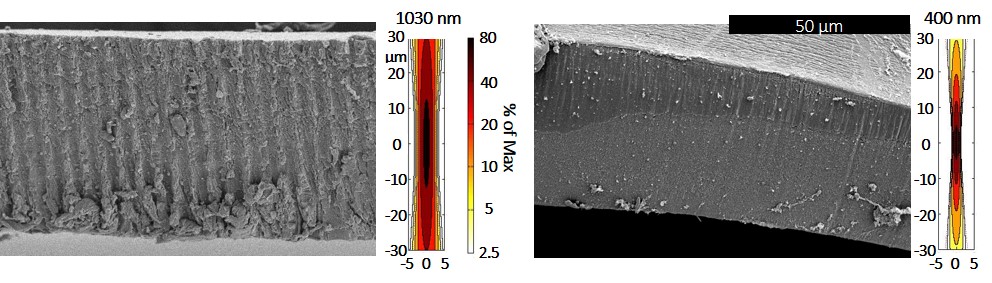


Cutting and Altering Transparent Tissues with Ultrafast Lasers
 Multi-photon interactions allow deposition of energy inside transparent tissues. They can photo-dissociate molecules and, at higher energies, ionize tissue and produce visible plasma (dilectric breakdown). Thermal relaxation of the plasma can lead to explosive vaporization in the focal zone, which enables tissue cutting. We explore approaches to enhancement of the transparent tissue dissection and its alteration with ultrafast lasers.
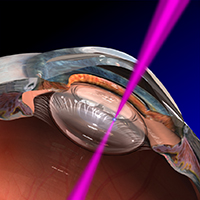 We study various interaction mechanisms of ultrafast lasers with transparent tissues in UV, visible and IR parts of the spectrum, including photodissociation, ionization, and explosive vaporization, and develop applications of these interactions to adjustment of the tissue refractive index as well as to cataract and refractive surgery.