<?xml version="1.0" encoding="utf-8"?>
<feed version="0.3" xmlns="http://purl.org/atom/ns#" xmlns:dc="http://purl.org/dc/elements/1.1/" xml:lang="en">
<title>Nicholas Jenkins</title>
<link rel="alternate" type="text/html" href="http://www.stanford.edu/~njenkins/" />
<modified>2010-05-28T03:11:19Z</modified>
<tagline>Department of English, Stanford University</tagline>
<id>tag:www.stanford.edu,2010:/~njenkins/3</id>
<generator url="http://www.movabletype.org/" version="3.16">Movable Type</generator>
<copyright>Copyright (c) 2010, njenkins</copyright>
<entry>
<title>a story about modernity</title>
<link rel="alternate" type="text/html" href="http://www.stanford.edu/~njenkins/archives/2010/01/a_story_about_m.html" />
<modified>2010-05-28T03:11:19Z</modified>
<issued>2010-01-09T17:04:24Z</issued>
<id>tag:www.stanford.edu,2010:/~njenkins/3.191</id>
<created>2010-01-09T17:04:24Z</created>
<summary type="text/plain">The Situation: We see each other five days a week but we never talk. Like two diligent ants committed to our dull, programmed pre-conscious tasks we routinely park almost next to each other in the same featureless cul-de-sac when we...</summary>
<author>
<name>njenkins</name>

<email>njenkins@stanford.edu</email>
</author>
<dc:subject>65day by day: a blog</dc:subject>
<content type="text/html" mode="escaped" xml:lang="en" xml:base="http://www.stanford.edu/~njenkins/">
<![CDATA[<p>The Situation: We see each other five days a week but we never talk. Like two diligent ants committed to our dull, programmed pre-conscious tasks we routinely park almost next to each other in the same featureless cul-de-sac when we drop our kids off at the elementary school. But, for all this, we work circumspectly but systematically to remain strangers. In the morning freshness, eye contact is scrupulously avoided and no bracing or cheery words, nor even manly nods, ever get exchanged. Truly, we practice the indifference of robots. He walks by me as if, were you to stop him and unscrew the covering on one of his plastic eyeballs, you would uncover a large photosensitive cell and a few wires. And if you were to unscrew me?</p>

<p>Footnotes to the Situation: He is short, dark-haired and dresses with a simplified stylishness. I know he is a scientist (company directory, working back from his daughter's name). From seeing that we drive back from school in the same general direction, I know too that he and his child live in the same part of town, as we do.</p>

<p>Observation: He gets under my skin.</p>

<p>Questions: Does my anger or fear (camouflaged sometimes as pity) derive from the red blotches on his cheeks, infallibly denoting the heavy drinker? Does it come from seeing that his car, though as bland in design as mine, is larger and more powerful (and thus more expensive) than mine? In other words, is this a socially derived frenzy (or jealousy?) on my part – the class anxiety of the irrelevant humanist before the trophies of science's sedulous acolyte? Does my anger (camouflaged sometimes as concern) come from suspecting that he is a disturbed man, a bully? I instance here his drives home, the blue car flashing past my stolid green vehicle, which have been more than once at dangerously high speed, manifesting the symptoms of road-rage – for example, the aggressive shrieking of his horn at dawdlers, the weaving between lanes, the determination to be first away from the light? </p>

<p>Or does this anger come from the mere fact of my being a so truly weak and resourceless character that when another person systematically (and perhaps pathologically?) ignores my existence, somewhere inside my ant mind I feel manically prompted to "take action"? Though of course, let me be very clear about this, the "action" I am talking about here exists only in fantasy, albeit that "action" is of a darkly retributive nature. </p>

<p>Conclusion: The thought occurs to me that if we had had the misfortune to be living say two thousand years ago, I would have designed a careful, essentially cowardly, ambush, knocked him in the eye (he would never hunt again), and (if he didn't get me first) would have walked off with his fur hat and arrows. And, in this daydream of mine, I flatter myself that the village would have thanked me.</p>

<p>[<em>Author's note: No intended resemblances exist between the entirely fictional person described here and any living person. And if any are imagined, the similarities discerned are entirely fallacious in nature.<em>] </p>]]>

</content>
</entry>
<entry>
<title>annals of black sheep: henry straith venn</title>
<link rel="alternate" type="text/html" href="http://www.stanford.edu/~njenkins/archives/2009/09/annals_of_black.html" />
<modified>2009-09-17T02:33:56Z</modified>
<issued>2009-09-15T02:43:33Z</issued>
<id>tag:www.stanford.edu,2009:/~njenkins/3.190</id>
<created>2009-09-15T02:43:33Z</created>
<summary type="text/plain"> [image: Henry Venn, 1759-1813, Henry Straith Venn&apos;s great-grandfather] The ancestral line of Henry Straith Venn (1869-1908) was a weighty, chronicled one stocked almost entirely on the male side by distinguished, formidable, moralistic churchmen. Henry&apos;s great-uncle, John Venn, was the...</summary>
<author>
<name>njenkins</name>

<email>njenkins@stanford.edu</email>
</author>
<dc:subject>65day by day: a blog</dc:subject>
<content type="text/html" mode="escaped" xml:lang="en" xml:base="http://www.stanford.edu/~njenkins/">
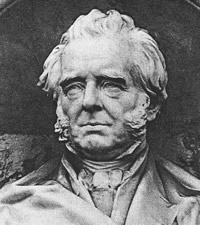
<![CDATA[<p><a href="http://www.stanford.edu/~njenkins/archives/images/henryvenn.jpg"><img alt="henryvenn.jpg" src="http://www.stanford.edu/~njenkins/archives/images/henryvenn-thumb.jpg" width="180" height="202" /></a> [image: Henry Venn, 1759-1813, Henry Straith Venn's great-grandfather] The ancestral line of Henry Straith Venn (1869-1908) was a weighty, chronicled one stocked almost entirely on the male side by distinguished, formidable, moralistic churchmen. Henry's great-uncle, John Venn, was the logician who introduced the 'Venn diagram', that pleasingly bulbous, promiscuous mathematical diagram. But the impression created by Henry Straith Venn's family history is one of purely, rigidly straight (or Straith) lines. </p>
<p>His great-great-grandfather, the famous Rev. Henry Venn (1725-1797), was descended 'from an unbroken succession of clergymen from the time of the Reformation' (ODNB). The Rev. Venn, one of the Clapham 'Saints', was a founding figure in the British abolitionist movement. He attacked Methodists for making 'the ground of their Assurance an inward fleeting instead of the faithfulness of Jehovah, the sensation of a fluctuating heart instead of the unchangeable promises of God'. The Venn family itself, in its unvarying names and starkly consistent beliefs, seemed to give an analogy on earth to the inflexible rightness and unchangingness of the God above Whom they worshipped so sedulously.</p>

<p>Henry Straith Venn's great-grandfather, the Rev. John Venn (1759-1813), was the first chair of the Church Missionary Society and the rector of Clapham, still in his time a centre of radical evangelicism and abolitionism: he was the 'spiritual guide' to many of the most eminent anti-slavery campaigners in the Clapham Sect. Henry Straith Venn's grandfather, the Rev. Henry Venn (1796-1873), was an Honorary Secretary of the Church Missionary Society in London for some 32 years.  Henry Straith Venn's father was Rev. Henry Venn (1838-1923), an Honorary Canon of Canterbury. One of Henry Straith Venn's sisters was married to a vicar who became the Bishop of Lewes (another was married to a cartoonist with Punch). </p>

<p>There was only the occasional swerve in the linearity of Venn family traditions. Here was one. In 1888, at the age of 18, Henry Straith Venn went up to his father's old college, Gonville and Caius in Cambridge. He stayed a single term. Within a year, Henry Straith Venn, from motivations unknown, was to be found farming, far away from Clapham and Cambridge, in Alleghany County, Virginia. In 1906 he married Miss Maria Garnett, the daughter of a lawyer from Washington, DC. Less than a year and a half later, Henry Straight Venn, the great-great-grandson of the Rev. Henry Venn who had consorted with notables such as the Countess of Huntingdon and the Earl of Dartmouth, died in America at the age of 38.  </p>

<p>SWithin six months, on July 1908, Maria Venn, his widow, gave birth to a boy, Henry Garnett Venn, a first and last child. As if Someone were intent on abolishing this whole errant Venn line, this touchingly human blemish on the family record, fatherless Henry Garnett Venn soon followed his progenitor into the bosom of God, dying three days after his birth, on 6 July 1908.</p>

<p>----------</p>

<p>'What's the point of this?' you ask me. 'Why bother?' </p>

<p>I answer: 'What else should a writer do except remember as honestly as possible? All the theories and cases and interpretations and axioms -- unless they are grounded in the actual, they are worthless. That's what I believe, even if it makes me a black sheep.'  </p>]]>

</content>
</entry>
<entry>
<title>ernst toller and ada doom</title>
<link rel="alternate" type="text/html" href="http://www.stanford.edu/~njenkins/archives/2009/09/ernst_toller_an.html" />
<modified>2009-09-03T20:52:45Z</modified>
<issued>2009-09-03T20:45:12Z</issued>
<id>tag:www.stanford.edu,2009:/~njenkins/3.189</id>
<created>2009-09-03T20:45:12Z</created>
<summary type="text/plain"> [image: Ernst Toller; source: IZRG-Bildarchiv] Auden&apos;s 1939 string of elegies and farewellings – &apos;In Memory of W. B. Yeats&apos;, &apos;In Memory of Ernst Toller&apos;, &apos;September 1, 1939&apos;, and &apos;In Memory of Sigmund Freud&apos; – contain some curiously discordant notes,...</summary>
<author>
<name>njenkins</name>

<email>njenkins@stanford.edu</email>
</author>
<dc:subject>65day by day: a blog</dc:subject>
<content type="text/html" mode="escaped" xml:lang="en" xml:base="http://www.stanford.edu/~njenkins/">
<![CDATA[<p><a href="http://www.stanford.edu/~njenkins/archives/images/ernsttoller.jpg"><img alt="ernsttoller.jpg" src="http://www.stanford.edu/~njenkins/archives/images/ernsttoller-thumb.jpg" width="107" height="178" /></a> [image: Ernst Toller; source: IZRG-Bildarchiv] Auden's 1939 string of elegies and farewellings – 'In Memory of W. B. Yeats', 'In Memory of Ernst Toller', 'September 1, 1939', and 'In Memory of Sigmund Freud' – contain some curiously discordant notes, as if there were some anarchic or nihilistic principle in them struggling against the ostensible protocol of solemnity. </p>

<p>For example, the Yeats elegy is filled with some fanciful Tennysonian echoes, which seem to hint at an odd analogy between the Irish poet and the Duke of Wellington.  And the gravely preoccupied and anguished 'September 1, 1939' (so much in the news in recently; I suppose, given that Auden said he finished the poem on 3 September 1939, one could say that the poem was completed 70 years ago today) begins with evocations of Ogden Nash's insouciant poem, 'Spring Comes to Murray Hill'.</p>

<p>I noticed another freakish note, this time in 'In Memory of Ernst Toller'. In that poem, written in May 1939, after Toller, whom Auden knew fairly well, had hanged himself in a New York hotel, Auden ponders the possible reasons for Toller's suicide. He wonders whether some early trauma was the ultimate cause: 'Did the small child see something horrid in the woodshed | Long ago?'</p>

<p>What is strange about this is that the question in this very depressed, subdued poem is couched in terms provided by a flagrantly comic novel of the period. <em>Cold Comfort Farm</em>, published by Stella Gibbons in 1932, is the story of the orphaned Flora Poste's stay with her relatives the Starkadders at Cold Comfort Farm in Howling, Sussex. The novel relates Flora's attempts to help the inhabitants of this strange outpost of madness in the heart of the English countryside become just slightly less eccentric.</p>

<p>One such inhabitant is the malevolent Aunt Ada Doom, 'the curse of Cold Comfort', who has been locked away upstairs for 20 years. Aunt Ada, Gibbons writes, became deranged as a result of an incident in childhood: 'When you were small – so small the lightest puff of breeze blew your little crinoline skirt over your head – you had seen something nasty in the woodshed.' The phrase 'something nasty in the woodshed' (with which Auden's 'something horrid in the woodshed' in the Toller elegy is virtually interchangeable) becomes something of a comic refrain in the later part of  <em>Cold Comfort Farm</em>.</p>

<p>What? A phrase from a famous Stella Gibbons satire of the agricultural novel in a poem by Auden about a German émigré? Can it mean anything? It must. Borrowings are never innocent, sterilized or inert in lyric poetry. Language cannot be recycled without bringing some memory of its original use and context into the new poetic setting. Here, glancingly, Auden hints through his use of a phrase from Gibbons's satiric novel at a relationship between the inner world of Toller, the hyper-sophisticated, male, left-wing activist and playwright and that of a splenetic old woman who has sat for two decades in a room in Sussex obsessed by a terrible moment from her childhood.</p>

<p>My guess is that Auden himself would have offered a brilliantly odd psychoanalytic rationale for the comparison, justifying his move as a species of what Lukács called in a haunting phrase a 'looking beyond the palpable'.  </p>

<p>There is probably much to be said for such an explanation. But, when this linguistic moment is set alongside other similarly outré, bizarre or counter-logical notes, such as those I briefly described earlier, which sound in Auden's poems of 1939, then it seems right to add that some other point – a point about poetry itself – is being made simultaneously with a point about the psyche. In the year when the Second World War began, Auden's poetry keeps returning in varying fashions to this 'monstrous' mode of yoking dissimilarities (Yeats and the Duke of Wellington, Toller and Aunt Ada) violently together without attempting to synthesize or harmonize the dissonances.  </p>

<p>I see in these moments within Auden's poems something dialectical, even a bit libertarian in play. In 1939 poets may no longer pose as the tyrannical presences systematizing and co-coordinating into a single, unified 'Gleichschaltung' the society of their poems. In every verbal world some visible or audible token of non-participation or anti-commitment to the serious goal the work seems intent on enacting must be present. Just at the moment when, <em>especially</em> at the moment when, the poet appears engaged on the most serious of tasks, then where socially engaged <em>Ego</em> was, there shall poetic <em>Id</em> be.</p>]]>

</content>
</entry>
<entry>
<title>nobility and poetry</title>
<link rel="alternate" type="text/html" href="http://www.stanford.edu/~njenkins/archives/2009/09/nobility_and_po.html" />
<modified>2009-09-01T20:42:47Z</modified>
<issued>2009-09-01T00:49:25Z</issued>
<id>tag:www.stanford.edu,2009:/~njenkins/3.188</id>
<created>2009-09-01T00:49:25Z</created>
<summary type="text/plain"> [Lord Byron on His Death-Bed, by Joseph-Denis Odevaere, about 1826] &apos;There is no element more conspicuously absent from contemporary poetry than nobility&apos;, Stevens wrote. Perhaps in a very literal way we should restore &apos;nobility&apos; to the history of contemporary...</summary>
<author>
<name>njenkins</name>

<email>njenkins@stanford.edu</email>
</author>
<dc:subject>65day by day: a blog</dc:subject>
<content type="text/html" mode="escaped" xml:lang="en" xml:base="http://www.stanford.edu/~njenkins/">
<![CDATA[<p><a href="http://www.stanford.edu/~njenkins/archives/images/byron.jpg"><img alt="byron.jpg" src="http://www.stanford.edu/~njenkins/archives/images/byron-thumb.jpg" width="157" height="110" /></a> [Lord Byron on His Death-Bed, by Joseph-Denis Odevaere, about 1826] 'There is no element more conspicuously absent from contemporary poetry than nobility', Stevens wrote. Perhaps in a very literal way we should restore 'nobility' to the history of contemporary poetry, if for no other reason than because it seems foreign to the field? Stevens did not quite mean it in this way, but it is true to say that one sociological theme almost entirely ignored is the dynastic and aristocratic, the 'noble', dimension to a certain strand of English poetry.</p>

<p>Think about this odd fact as you consider the general proposition. Between Lord Byron and Robert Lowell, a certain strand of self-consciously authoritative, seigneurial English male poets all had Plantangenet ancestors. Thus,</p>

<p><a href="http://bit.ly/lSJPD">Byron</a> was a 16 times great-grandson of Henry III of England (1207-1272)<br />
 <br />
<a href="http://bit.ly/d93A6">Shelley</a> was an 18 times great-grandson of Henry III</p>

<p><a href="http://bit.ly/kHtJN">Tennyson</a> was a 17 times great-grandson of Henry III</p>

<p><a href="http://bit.ly/CHVtI">Swinburne</a> was a 20 times great-grandson of Henry III</p>

<p><a href="http://bit.ly/13p8wj">Eliot</a> was an 18 times great-grandson of Henry III</p>

<p><a href="http://bit.ly/FNgPZ">Auden</a> was a 20 times great-grandson of Henry III</p>

<p>Robert <a href="http://bit.ly/30c9rF">Lowell</a> was a 21 times great-grandson of Henry III</p>

<p>These poets were all therefore distantly but discernibly related to one another. For example, Auden was</p>

<p>the 16th cousin, four times removed of <a href="http://bit.ly/16Pn2q">Byron</a></p>

<p>the 16th cousin, three times removed of <a href="http://bit.ly/ejgE2">Shelley</a></p>

<p>the 14th cousin, twice removed of <a href="http://bit.ly/3vsOkc">Tennyson</a></p>

<p>the 11th cousin, once removed of <a href="http://bit.ly/134s8i">Swinburne</a></p>

<p>the 17th cousin, three times removed of <a href="http://bit.ly/27hi8n">Eliot</a></p>

<p>and the 18th cousin, once removed of Robert <a href="http://bit.ly/15SdSq">Lowell</a></p>

<p>Poetry has always been a tiny world. We always knew that, not without some anxiety. Perhaps it has also, in a certain way, always been a familial world? A world of hermetic 'connections'? Verbally and socially an aristocratic world? A world which has favoured the kind of imagination and speech patterns cultivated by people from a privileged class?</p>

<p>Personally, I find it unpleasant -- dismaying, unsettling, even -- to entertain the possibility that such notions as these are valid. Who wants to be in love with a corrupt medium? Who wants to entertain the idea that the sublimated version of an aristocratic voice is what one secretly, basely, in spite of oneself, worships in poetry, that <em>this</em> is what characterizes a kind of poem one reverences? There may be something here for people like me to face up to. <em>Hypocrite lecteur</em>, must I learn to believe that <em>noblesse</em> really does <em>oblige</em>?</p>]]>

</content>
</entry>
<entry>
<title>family business</title>
<link rel="alternate" type="text/html" href="http://www.stanford.edu/~njenkins/archives/2009/07/family_business.html" />
<modified>2009-07-21T03:28:51Z</modified>
<issued>2009-07-21T03:12:32Z</issued>
<id>tag:www.stanford.edu,2009:/~njenkins/3.187</id>
<created>2009-07-21T03:12:32Z</created>
<summary type="text/plain"> [image: John Varley (1778-1842), by John Linnell] Sometimes, as cell by solitary, database cell I monotonously and relentlessly build up the genealogical reef that is the Family Ghosts website, I get the feeling, slightly Pynchonesque in a paranoid way,...</summary>
<author>
<name>njenkins</name>

<email>njenkins@stanford.edu</email>
</author>
<dc:subject>65day by day: a blog</dc:subject>
<content type="text/html" mode="escaped" xml:lang="en" xml:base="http://www.stanford.edu/~njenkins/">
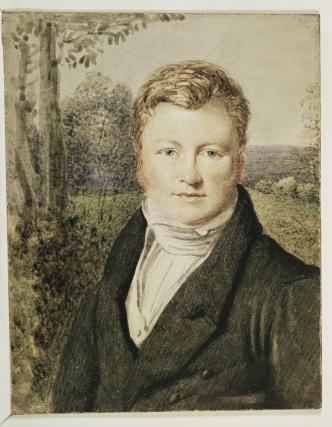
<![CDATA[<p><a href="http://www.stanford.edu/~njenkins/archives/images/johnvarley.jpg"><img alt="johnvarley.jpg" src="http://www.stanford.edu/~njenkins/archives/images/johnvarley-thumb.jpg" width="166" height="213" /></a> [image: John Varley (1778-1842), by John Linnell] Sometimes, as cell by solitary, database cell I monotonously and relentlessly build up the genealogical reef that is the <a href="http://auden.stanford.edu">Family Ghosts</a> website, I get the feeling, slightly Pynchonesque in a paranoid way, that every intellectual affiliation is subtended by an occult family connection. </p>

<p>Take W. B. Yeats’s well-known fascination at the end of the 19th century with the works of Blake and Shelley. Critics have usually parsed this passionate interest in the visionary strain of Romanticism either as being Yeats's way of disaffiliating himself from his father's mid-Victorian rationalism or as being symptomatic of the common Anglo-Irish obsession with the supernatural. Or, of course, as being both.</p>

<p>Yet it has apparently escaped notice that to the young Yeats Blake and Shelley must have been almost living, breathing presences, alive to him through a family tie. Yeats's mystically-inclined aunt, Isabella Pollexfen (1849-1938), who lived in London and gave her nephew a copy of A. P. Sinnett's <em>Esoteric Buddhism </em>in 1884, was married to the landscape artist John Varley (1850-1933).</p>

<p>Varley was the grandson of another well-known artist, also called John Varley (1778-1842). Both grandfather and grandson was fascinated by astrology and the occult, and the elder Varley was a close friend of William Blake. Varley and Blake shared a metaphysical fascination. Varley encouraged and took seriously Blake's visions. Indeed, between 1819 and 1825 during evenings at Varley's house in Great Titchfield Street, London, Varley and Blake collaborated on the 'Visionary Heads' project, producing together some 187 portraits of 'historical and imaginary figures' they saw in visions there. (For a detailed diagram of Yeats's relation to John Varley, click <a href="http://bit.ly/hVklP">here</a>.)</p>

<p>Yeats's uncle, the younger John Varley (1850-1933), was also the great-nephew of John Gisborne (d. 1835/36), who in 1800 married Maria Reveley (1770-1836), the friend of Godwin, Wollstonecraft and the Shelleys and to whom in July 1820 P. B. Shelley wrote the 'Letter to Maria Gisborne' while staying in the Gisbornes' house in Leghorn. In other words, Yeats's uncle was the great-nephew of Maria Gisborne. (For a detailed diagram of Yeats's relation to Maria Gisborne, click <a href="http://bit.ly/jwpXs">here</a>.)</p>

<p>These faint, almost diaphanous but still suggestive, human connections stretching between Yeats and his iconic predecessors are not determinative. At least, I am certainly not willing to say they are. However, knowledge of them does add within the arid, abstract outlines of intellectual history a sense of subtle, emotional tincturing and warm plasticity, like a Romantically-shining watercolour wash added to a neoclassically-schematized, inked face. </p>

<p>When, in this familial context, Yeats studied the writings of Blake and Shelley perhaps it was almost -- subliminally or not, and in a way immediately reminiscent of the visitations from the beyond occurring at the séances which Yeats habitually attended during the period when he was also studying these artists – perhaps it was almost as if he heard their living voices murmuring to him from an adjoining room.</p>

<p>Through the younger John Varley, his uncle, the youthful W. B. Yeats might have seemed tantalizingly close to being 'in touch' with his chosen predecessors. Browning, in 'Memorabilia', supplied the essential poetic gloss on this eerie amalgam of nearness and farness which can sometimes be incarnated in an otherwise somewhat ordinary person:</p>

<p>Ah, did you once see Shelley plain,<br />
&nbsp;&nbsp;&nbsp;&nbsp;&nbsp;And did he stop and speak to you?<br />
And did you speak to him again?<br />
&nbsp;&nbsp;&nbsp;&nbsp;&nbsp;How strange it seems, and new! </p>

<p>No-one, least of all me, can be immune to the frisson of that asymptotic approach to so much creativity and vitality, to that romance of feeling, for a while, only 'at one remove' from what we imagine to be the fully emancipated life.</p>]]>

</content>
</entry>
<entry>
<title>garage sale</title>
<link rel="alternate" type="text/html" href="http://www.stanford.edu/~njenkins/archives/2009/07/garage_sale.html" />
<modified>2009-07-15T02:56:03Z</modified>
<issued>2009-07-15T01:50:19Z</issued>
<id>tag:www.stanford.edu,2009:/~njenkins/3.186</id>
<created>2009-07-15T01:50:19Z</created>
<summary type="text/plain"> We&apos;d never done it before. Put all of our gross, dusty, possessed, mistaken innards out there in the front yard for everyone to drive past, to handle, inspect, ponder, hold up, toss down and smirk at. I felt as...</summary>
<author>
<name>njenkins</name>

<email>njenkins@stanford.edu</email>
</author>
<dc:subject>65day by day: a blog</dc:subject>
<content type="text/html" mode="escaped" xml:lang="en" xml:base="http://www.stanford.edu/~njenkins/">
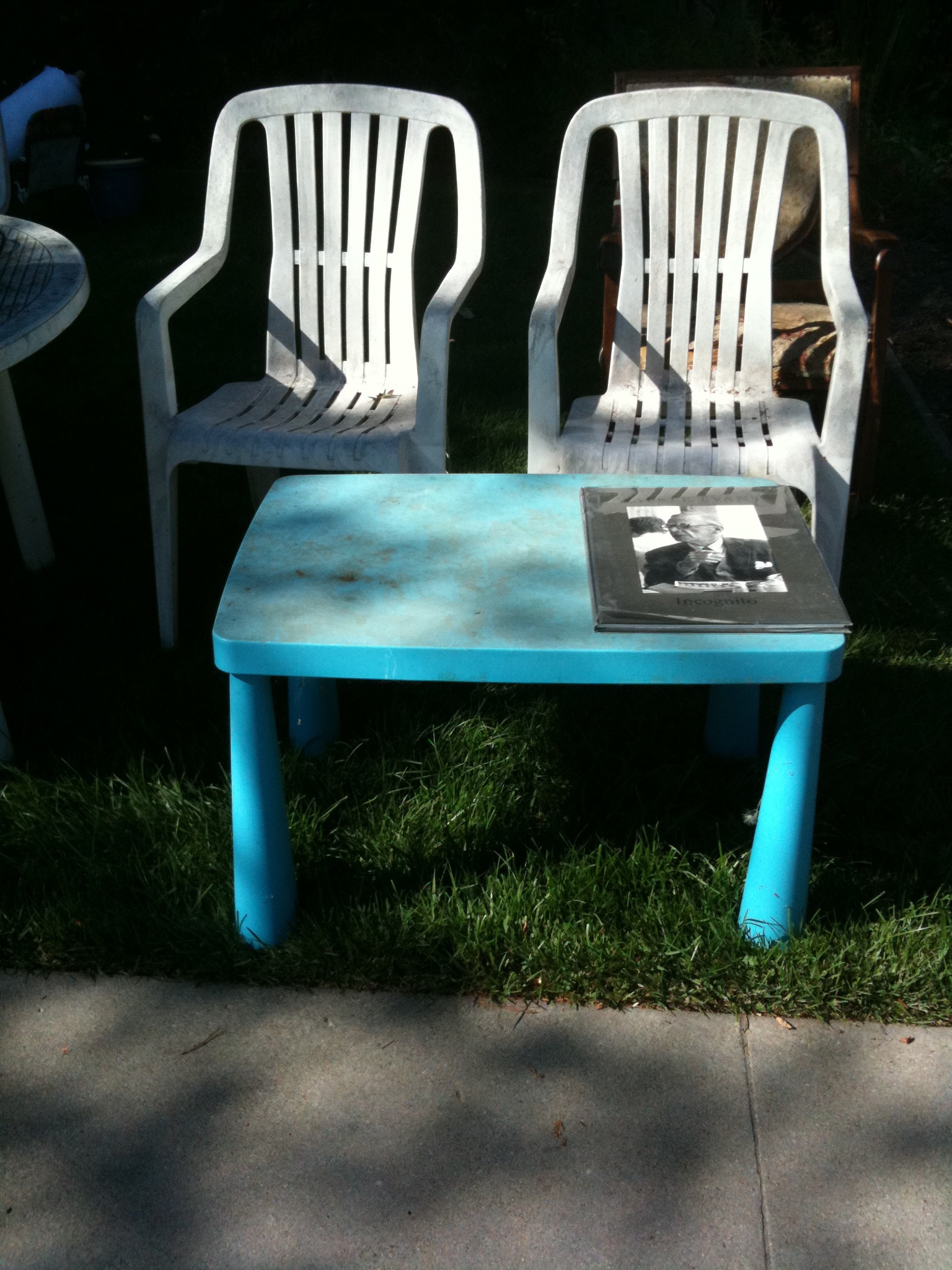
<![CDATA[<p><a href="http://www.stanford.edu/~njenkins/archives/images/garagesale.jpg"><img alt="garagesale.jpg" src="http://www.stanford.edu/~njenkins/archives/images/garagesale-thumb.jpg" width="153" height="204" /></a> We'd never done it before. Put all of our gross, dusty, possessed, mistaken innards out there in the front yard for everyone to drive past, to handle, inspect, ponder, hold up, toss down and smirk at. I felt as if we were posting a series of candid snap-shots taken by a camera concealed in our bathroom mirror, blown up to more than life-size and now spread in duplicates across the garage doors for the world to contemplate. But in a way this was worse than nakedness, the frailness of the body, because this was about something deeper, subtler, more damaging. It was about our relationship to money and things, the weakness of the psyche. </p>

<p>The sun roasted me as I sat there on Sunday for three hours in an unwanted chair, wondering with self-approving irony, if anyone would make an offer for me. Probably not.... With my clenched spirit and my hard shadow spread across the lawn, from time to time I politely spewed clichés with a smile: enduring, and imposing, a mind-numbing conversation, all in the ultimately unsuccessful effort to (figuratively speaking) cut my losses on a broken-down breadmaker we long ago bought on impulse from the local GoodWill and never really used.</p>

<p>Three impressions stay with me in the aftermath. First, <em>the tear-inducing pathos of discarded clothes</em>. My wife's skirts, my kids' baby jackets and tiny pairs of pants. Their shoes. Her shoes. And... and. I wanted to kneel down amongst the gawking bargain-hunters, raise the fabrics to my face like holy relics and weep as I breathed in the memory-fragrance of those familiar colours and textures. </p>

<p>Second, <em>the tormenting feelings of guilt and embarrassment -- and shock -- I experienced at silently being forced to admit to myself and everyone else how much junk we own. And what that says, or what I fear that people will think it says, about me.</em> The bag of grout, the black plastic sack of defunct lightsabers, the toy fire-engine with one wheel missing, the skis with blunt edges -- as I laboriously toted each of them to the sidewalk, I felt like a squinting, Dantesque hunchback on the lower slopes of Purgatory, working off my abysmal and denaturing sin of covetousness by being forced to carry for a thousand years in a figure of eight (or of infinity) the tawdry manifestations of my greed. </p>

<p>Third, <em>the crazy hammer-blows fate inflicts as it beats at us, like a red-faced farrier driving nails into a hoof, pounding the lesson of humility, though never soon enough, into our thick skulls</em>. I could hardly believe the psychological frailty, the diminishment and batteredness and nervousness, of so many of the middle-aged people who wandered slowly through our middle-aged cast-offs and boxes. It was as if, men and women alike, these muttering, paunchy wraiths had all tottered slowly back from a terrible war to be here today. Only this war was conventionally known as their lives' "best decades".</p>

<p>We sold a bit of stuff, we made a bit of money (I can feel the soft, untidy roll of bills wadded in my pocket as I sit here now). Afterwards, we carted much more off to the GoodWill objects-cemetery . The bigger things we left out front hoping that in the night, while we slept, the "raccoons" would take them away. It is over. It will happen again. </p>

<p>One thing that it took me some time to realize and that I can still hardly believe or understand -- in spite of all my gruff, paternalistic exhortations to the family before the sale to "throw it out!", I barely put more than a single, slender book from my own overflowing, repulsive encumbrances and ranges of stuff down on the sidewalk for people to see and touch and bid for or reject. </p>

<p>I think it means that, sometime, the lesson will have to be repeated, its implications faced. From this point on, life may be a garage-sale of the emotions.</p>]]>

</content>
</entry>
<entry>
<title>the red sea</title>
<link rel="alternate" type="text/html" href="http://www.stanford.edu/~njenkins/archives/2009/07/the_red_sea.html" />
<modified>2009-07-09T01:23:32Z</modified>
<issued>2009-07-05T02:29:37Z</issued>
<id>tag:www.stanford.edu,2009:/~njenkins/3.185</id>
<created>2009-07-05T02:29:37Z</created>
<summary type="text/plain"> [image: Alfred Tennyson, by John Everett Millais, 1881, National Museums Liverpool, Lady Lever Art Gallery] &apos;For I dipt into the future, far as human eye could see, | Saw the Vision of the world, and all the wonder that...</summary>
<author>
<name>njenkins</name>

<email>njenkins@stanford.edu</email>
</author>
<dc:subject>65day by day: a blog</dc:subject>
<content type="text/html" mode="escaped" xml:lang="en" xml:base="http://www.stanford.edu/~njenkins/">
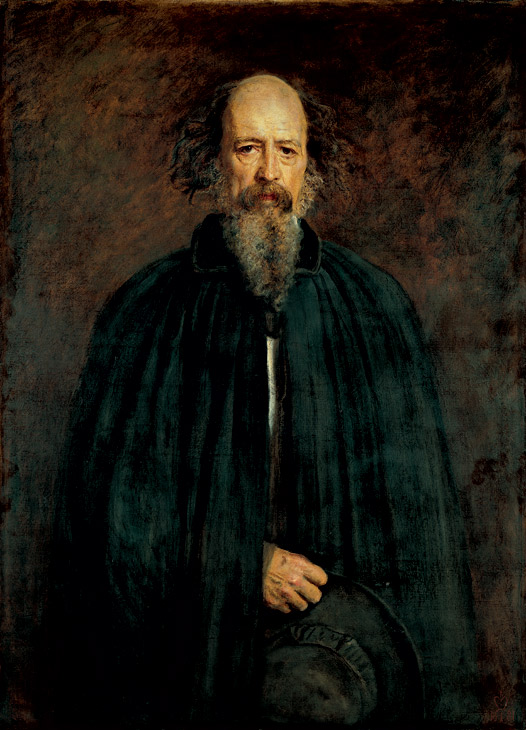
<![CDATA[<p><a href="http://www.stanford.edu/~njenkins/archives/images/millaistennyson.jpg"><img alt="millaistennyson.jpg" src="http://www.stanford.edu/~njenkins/archives/images/millaistennyson-thumb.jpg" width="105" height="146" /></a> [image: Alfred Tennyson, by John Everett Millais, 1881, National Museums Liverpool, Lady Lever Art Gallery] 'For I dipt into the future, far as human eye could see, | Saw the Vision of the world, and all the wonder that would be.'</p>

<p>Cloak-like, Death wraps itself around the name of Tennyson. Or rather, Tennyson -- a poet of 'emotional intensity and violence… [and] the blackest melancholia' as T. S. Eliot said -- wrapped the cloak death around himself. Death is the master-theme of Tennyson's poetry: all his central poems are elegiac, most obviously 'In Memoriam'. It is a though his whole vision of life was a deathly one. He told one correspondent: 'When I was about twenty, I used to feel moods of misery unutterable! I remember once in London the realization coming over me, of the whole of its inhabitants lying horizontal a hundred years hence. The smallness and emptiness of life sometimes overwhelmed me –-.' </p>

<p>All this is well-known. Less well-known, but very disturbing and startling -- as if, although there is no logical or causal connection, art were nonetheless casting a shadow onto the actual world -- is to see how the artistic theme of death has played out in family history. One can do that simply by tracing the tragic motif in the lives of Tennyson's descendants through their successive generations.</p>

<p>The <em>first generation</em>: Son of a manic depressive and alcoholic father, brother to several extremely eccentric and troubled siblings, Tennyson and his wife Emily Sellwood lost their first child, an unnamed boy, at birth in 1851. Subsequently, they had two surviving sons, Hallam Tennyson and Lionel Tennyson, the latter of whom, during a feverish, doomed voyage back from India to England, died at the age of 32 in April 1886 near Aden in the Red Sea. 'The loss to us is indeed unspeakable but infinite Love and Wisdom have ordained it', Tennyson wrote that year, certainty dwindling in the course of his sentence. (He also used the word 'unspeakable', albeit in a different way, in his 1888/89 poem about Lionel's death, 'To the Marquis of Dufferin and Ava'.)</p>

<p>Before his death, Lionel and his wife Eleanor Locker (the daughter of the poet Frederick Locker-Lampson) had two sons who survived to old age, one of them being the influential mid-century Tennyson commentator Sir Charles Tennyson. Hallam Tennyson, the Poet Laureate's other son, the survivor-figure from the first generation, and his wife Audrey Boyle had three sons of his own. Of those three boys from <em>the second generation</em>, two were killed in action during the war of 1914 to 1918. One, Sub-Lieutenant Hon. Harold Courtenay Tennyson, died when his ship hit a mine in the English Channel in 1916, and one, Captain Hon. [Alfred] Aubrey Tennyson, perished on a battlefield in France in 1918. Hallam and Audrey Tennyson's other son, Major Hon. Lionel Tennyson (named after his dead uncle) was wounded three times during the conflict and only barely came through the war.</p>

<p>The <em>third generation</em>: Sir Charles Tennyson and his wife Ivy Pretious had one daughter who died at birth in 1910. They subsequently had three sons. The first, Lieut. [Frederick] Penrose Tennyson was killed in a plane crash while on active service in July 1941. The second, Capt. [Charles] Julian Tennyson was killed in action in 1945. One of this trio of Tennysonian offspring might have seemed to have avoided violent death However, the third, [Beryl] Hallam Tennyson, the great-grandson of the poet, in London in December 2005 at the age of 85 was stabbed to death in his bed.</p>

<p>'To question, why | The sons before the fathers die, | Not mine!' Tennyson exclaims in 'To the Marquis of Dufferin and Ava' as he confronts his own son's death. Not mine, either. I am just keeping score. In Tennyson's case, his first child died at birth and one of his other sons died at the age of 32 'beneath a hard Arabian moon | And alien stars'. Two of his grandsons died violently during the First World War, one at sea, one on land. Two of his great-grandsons were killed in action during the Second World War, one from the air, one on land. And their surviving brother, another of Tennyson's great-grandsons, was murdered. Tennyson once described 'In Memoriam' as 'rather the cry of the whole human race than mine'. British history of the first half of the 20th century is filled with death. But, even judged against that sombre general benchmark, this swathe of tragedies is stunning and gives a new, painful kind of spin to the idea of a poet's social "representativeness".</p>

<p>I would like to have asked Mick Imlah about all this. I should have done so. He loved Tennyson's poetry and understood it, as his own poems show, in extraordinary ways. He was almost digitally attuned to posthumous reverberations of poetry in life: just look at 'Afterlives of the Poets' in <em>The Lost Leader</em>, part one of which is taken up with his 'phantom Tennyson Centenary project'. I know he would have had some reactions to this eerie, morbid ripple of abrupt terminations expanding outwards from the Laureate centre through the Tennysonian generations. Probably his reactions would have been strange and acute, perhaps even unsettling. Silence, though, is all. For Mick himself 'is not here; but far away' and now I can never ask.<br />
</p>]]>

</content>
</entry>
<entry>
<title>recent extracts from a Misapprehensions Diary</title>
<link rel="alternate" type="text/html" href="http://www.stanford.edu/~njenkins/archives/2009/06/recent_extracts.html" />
<modified>2009-06-25T01:23:26Z</modified>
<issued>2009-06-25T01:18:45Z</issued>
<id>tag:www.stanford.edu,2009:/~njenkins/3.184</id>
<created>2009-06-25T01:18:45Z</created>
<summary type="text/plain"> My mind was elsewhere – over and over, I kept hearing in my head the disincarnated phrase &quot;Everything ends in the body.&quot; I was wondering if I would ever get a chance to stand moodily, theatrically in front of...</summary>
<author>
<name>njenkins</name>

<email>njenkins@stanford.edu</email>
</author>
<dc:subject>65day by day: a blog</dc:subject>
<content type="text/html" mode="escaped" xml:lang="en" xml:base="http://www.stanford.edu/~njenkins/">
<![CDATA[<p><a href="http://www.stanford.edu/~njenkins/archives/images/magna-doodle-erased.jpg"><img alt="magna-doodle-erased.jpg" src="http://www.stanford.edu/~njenkins/archives/images/magna-doodle-erased-thumb.jpg" width="240" height="240" /></a></p>

<p>My mind was elsewhere – over and over, I kept hearing in my head the disincarnated phrase "Everything ends in the body." I was wondering if I would ever get a chance to stand moodily, theatrically in front of a group of students and to say "We see through a class darkly." I was thinking about the essay I want to write about Mick and I was remembering our gloomy salad days together. I was.... Well, the usual kind of stuff, then.</p>

<p><em>Medical Foundation</em></p>

<p>As I waited alone for the doctor in the white and beige cube, I glanced up at a rack full of handouts on the consulting room wall. I saw "BEG" in bold caps. No, not "BEG", it was actually "EEG". Below that, on the wall there was a picture of the Duchess of Cornwall wincing and holding her wrist up to illustrate the pain of CTS. No, it was… someone else, less well-known. My eyes kept travelling. I saw "Nick Exercises". No, it was "Neck exercises."</p>

<p><em>Gym</em></p>

<p>As I watched Owen doing straddle-rolls and cartwheels, my attention wandered and I thought I caught sight of a young teacher, idling against a wall, writing "God" and drawing a star in the sunlit dust on a mattress. No, it was "Gold" she was tracing out, and a crude star.</p>

<p><em>Freeway</em></p>

<p>In the middle lane I came floating round a long right turn on 101 near San Carlos, and there, at the start of the marshland that runs from the side of the road, was the hoarding for the Giants. It showed a vast man in an "SF" cap and a white polo-shirt, with headphones on and a mic at his mouth. Next to him was the logo, "I want whiners!" I did a double-take, frowned, and returned my gaze to the river of road ahead. Then I looked back again. No, it was "I want winners!"</p>

<p><em>Church</em></p>

<p>The violin school semi-annual concert. Hugo had already played his solo piece and was slouched in the pew beside us. I was trying dutifully to focus on an overweight teenager as she sawed flatly away at something by Vivaldi. I looked up at the lofty windows of All Saints, gleaming with the afternoon sunlight of the photographer's "golden hour". Imagine my silent alarm when I glimpsed a jay high above nervously butting its head against the glass, trying to get out of the building, fleeing the sound of Vivaldi. Oh, no. The bird was outside, trying to get in.</p>

<p><em>Street</em></p>

<p>We came out of the Creamery. It was getting a bit cold and dark. We strolled. At the corner of Hamilton and Something, we had the light and we started to walk. Nonetheless, a prissy-looking middle-aged motorist in his sky-blue Prius suddenly appeared, gingerly chopped in front of us, realized what he had done but decided to go for it nonetheless. Mouth-pursed, slowly, determinedly, as if he were abroad and felt that an uncouth local were about to grab for his purse, he rounded the turn, his right tyres not far from our shoes. As the car slowed but kept moving, the passengers in the cabin (seemingly dressed up for a night at a concert and a meal at a good restaurant afterwards), were startled to see a middle-aged white man, hair rather wild, out in the street peering into their cabin, giving them a mildly odd, mildly unhinged smile, barking an incomprehensible phrase and waving at them something that might have been a peace sign. "On" something, no doubt....</p>]]>

</content>
</entry>
<entry>
<title>chopsticks</title>
<link rel="alternate" type="text/html" href="http://www.stanford.edu/~njenkins/archives/2009/05/chopsticks.html" />
<modified>2009-06-25T01:18:33Z</modified>
<issued>2009-05-20T21:03:59Z</issued>
<id>tag:www.stanford.edu,2009:/~njenkins/3.183</id>
<created>2009-05-20T21:03:59Z</created>
<summary type="text/plain"> A spring evening. An area presently at peace. A dim light. Are we almost alone here? The food is gone. In the bleach blue tank an armoured, bronze prisoner stirs, then lapses back into the immobility of despair. Bubbles...</summary>
<author>
<name>njenkins</name>

<email>njenkins@stanford.edu</email>
</author>
<dc:subject>65day by day: a blog</dc:subject>
<content type="text/html" mode="escaped" xml:lang="en" xml:base="http://www.stanford.edu/~njenkins/">
<![CDATA[<p><a href="http://www.stanford.edu/~njenkins/archives/images/hunan%20garden.jpg"><img alt="hunan garden.jpg" src="http://www.stanford.edu/~njenkins/archives/images/hunan%20garden-thumb.jpg" width="229" height="131" /></a> A spring evening. An area presently at peace. A dim light. Are we almost alone here? The food is gone. In the bleach blue tank an armoured, bronze prisoner stirs, then lapses back into the immobility of despair. Bubbles rise. To hand, the princes yell and fence with chopsticks. But their father broods on his lost kingdom, the light in a glass of water. A battered portfolio arrives from the north. (He imagines it is stained with the tears of a thousand unsung heroes.) In it, bad news. (He suppresses a sigh.) On it, four cookies like sugared shrimps. The red message in the one which the emperor chooses -- the only one left -- is kindly, obsequiously meant: "You will make a name for yourself in the field of entertainment." He, though, sees dark auguries in these professionally sunny words! </p>]]>

</content>
</entry>
<entry>
<title>beyond wikipedia - notes on robert lowell&apos;s family</title>
<link rel="alternate" type="text/html" href="http://www.stanford.edu/~njenkins/archives/2009/03/beyond_wikipedi_1.html" />
<modified>2009-03-18T22:22:42Z</modified>
<issued>2009-03-16T18:56:28Z</issued>
<id>tag:www.stanford.edu,2009:/~njenkins/3.181</id>
<created>2009-03-16T18:56:28Z</created>
<summary type="text/plain"> [image: Poets in a giant landscape -- Lowell and Elizabeth Bishop in Brazil, summer of 1962.] [note: In what follows I have provided in parentheses, after the name of just about each of the individuals mentioned, the unique &quot;I&quot;...</summary>
<author>
<name>njenkins</name>

<email>njenkins@stanford.edu</email>
</author>
<dc:subject>65day by day: a blog</dc:subject>
<content type="text/html" mode="escaped" xml:lang="en" xml:base="http://www.stanford.edu/~njenkins/">
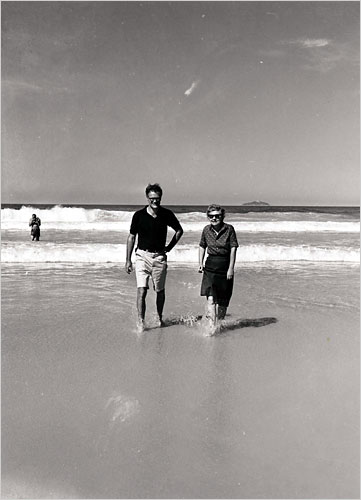
<![CDATA[<p><a href="http://www.stanford.edu/~njenkins/archives/images/lowell-bishop-1962.jpg"><img alt="lowell-bishop-1962.jpg" src="http://www.stanford.edu/~njenkins/archives/images/lowell-bishop-1962-thumb.jpg" width="144" height="200" /></a> [image: Poets in a giant landscape -- Lowell and Elizabeth Bishop in Brazil, summer of 1962.] </p>

<p>[<em>note: In what follows I have provided in parentheses, after the name of just about each of the individuals mentioned, the unique "I" number which the "<a href="http://auden.stanford.edu/">Family Ghosts</a>" database assigns to each person in its records. For example, George Washington is "(I5457)". Anyone who visits the "<a href="http://auden.stanford.edu/">Family Ghosts</a>" website can type the relevant "I" number into the search box at the top right of the home page to go directly to the site's record for that individual. Alternatively, readers can click on the links below here, which will diagram Robert Lowell's relationship to the person in question.</em>]</p>

<p><br />
<strong>"All that I know…"</strong></p>

<p>The more middle-aged I grow, the more Socratic I get. Well, at least in one way. That is to say, the more I read, the more I realize that "All that I know is that I know nothing" (Ἓν οἶδα ὅτι οὐδὲν οἶδα; Socrates cited in Diogenes Laertius, <em>Lives of the Philosophers</em>, bk. 2 sec. 32). Or, to put it another way, less elegantly but perhaps also more realistically, "all that I know is that I have probably forgotten whatever it was." Middle-age is the opening up of vast new, and previously unsuspected, areas of cognitive darkness, before and behind you. It is like standing at the ship's rail at midnight and staring out at the sea. In this chilling psychic obscurity you quickly come to understand that the dark, cold, unfathomable, glinting ocean of ignorance in your head stretches everywhere further, over remoter, less knowable horizons than your inner eye can even discern. </p>

<p>I am therefore an averagely compulsive, averagely panicky user of Wikipedia to check up in a pinch on facts, people, dates. But how much good does it really do? I've come to feel that "All that I know is that after consulting Wikipedia I still know virtually nothing." Take an instance. I've been reading a lot of Robert Lowell's poetry recently. Here is my good friend Wikipedia on <a href="http://en.wikipedia.org/wiki/Robert_Lowell">Lowell</a>.</p>

<p>"Lowell was born in Boston, Massachusetts to a Boston Brahmin family that included the poets Amy Lowell and James Russell Lowell. His mother, Charlotte Winslow, was a descendant of William Samuel Johnson, a signer of the United States Constitution, Jonathan Edwards, the famed Calvinist theologian, Anne Hutchinson, the Puritan preacher and healer, Robert Livingston the Elder, Thomas Dudley, the second governor of Massachusetts, and Mayflower passengers James Chilton and his daughter Mary Chilton."</p>

<p>Robert Lowell's own immediate, "nuclear" family circumstances were slightly constrained, parched and limited. He was the only child of a father, who was himself an only child and who never knew his own father. But perhaps more than any other poet Lowell pushed the "family experience" into the centre of modern poetry's usable subject matter. Following M. L. Rosenthal, critics often casually label Lowell one of the first "confessional poets." It is just as true, and more meaningful, to say that he is one of the first strong "familial poets."</p>

<p>This is paradoxical because in many ways, not least in its extraordinary historical lustre, Lowell's family was not like most others. Just because he was a poet, his own sense of family lineage was intense and conflicted. He sometimes claimed a lack of interest. "Sorry for all this family business," he wrote to Giovanna Madonia in a letter of March 1954, "I too find it tiresome and alien." But at moments of (literary and/or psychological) crisis and breakthrough, his fascination with his own genealogical past was radiant. At the time in the mid-1950s when he was writing the family poems included in <em>Life Studies</em>, he revelled in the experience of uncovering his roots. "I had a little ancestor-worshipping spree the other day," he told his cousin once removed <strong>Harriet Patterson Winslow</strong> (I6828) in February 1956, </p>

<p>"and read up all we had in the house written by ancestors, and even worked out on four type-written pages my family tree. How quickly it all runs into the sands of the unknown. What sort of man was my Grandfather Lowell, who died in his twenties, leaving only a Phi Beta Kappa key, a photograph, his name on a wall at St. Mark's School? He had been married only a few months, and Daddy, his first child was not yet born. There are many of these wistful early deaths; Sarah Stark, poor Julian-James, not an ancestor but my patron, and benefactor, as Dickens would say."</p>

<p>Indeed almost certainly one of those books which Lowell "read up" was <em>Biographical Sketches of the Bailey-Myers-Mason Families, 1776 to 1905: Key to a Cabinet of Heirlooms in the National Museum, Washington</em> (1908), a partial family history written by his first cousin twice removed, <strong>Cassie Mason Myers Julian-James</strong> (I6760). The <Biographical Sketches</em> volume forms the cumbrous foil against which the whole of the later, familial sections of <em>Life Studies</em> are constructed.</p>

<p>Wikipedia's entry is alert to Lowell's historical version of the "family romance". However, for people such as me the plethora of famous names it spills out in its entry on the poet generates not clarity but a new degree of nebulousness. A bit more information actually makes one feel less learned. The glamorous Lowellian ancestors are invoked but simultaneously surrounded by a haze of uncertainty. Lowell? A descendent of Anne Hutchinson? But how exactly? Lowell? A descendent of Mary Chilton? But how exactly? In the extended Winslow family Mary Chilton's mythic status is, to cite Lowell's words in a draft of his unpublished autobiography, that of "the first woman from the <em>Mayflower</em> to have stepped ashore on Plymouth Rock". American history was family history. Family history was American history. Perhaps because of this very mythic centrality, obscurity still swirls around the Lowell/Winslow past like fog around a rock.</p>

<p>I decided that I could not just leave it to Wikipedia. Or to anyone else. I needed to do some leg- (and arm-) work myself. Here are the notes I brought back from my trek. It has been possible to identify 26 out of his 30 immediate ancestors: see <a href="http://tinyurl.com/b8b86m">this map of RL's immediate ancestry</a>. The notes constitute a modest attempt to sponsor a higher degree of factual, historical precision in future discussions of Lowell's family romance. Thus, my findings slightly extend knowledge of Lowell's family connections amongst the "Mayflower | screwballs" and many others besides, including American Jews. </p>

<p>My investigation complements and extends the excellent notations by Frank Bidart and David Gewanter in Lowell's <em>Collected Poems</em> as well as those by Saskia Hamilton in her masterful edition of Lowell's <em>Letters</em> and by Hamilton and Thomas Travisano in their recently-published collection of Lowell's and Elizabeth Bishop's correspondence, <em>Words in Air</em>.</p>

<p>I might as well begin with the Wikipedia entry, since that is what started the whole story.</p>

<p><br />
<strong>Lowell's Wikipedia entry -- facts</strong></p>

<p>Robert Lowell <em>was</em> related to all the figures Wikipedia mentions, though it never explains in any case how he was. Here are the filled-in gaps:<br />
 <br />
<strong>Amy Lowell</strong> (I6598), 1874-1925, poet, Amy Lowell's great-grandfather and Robert Lowell's great-great-grandfather were stepbrothers: that is, both were sons of <strong>Hon. John Lowell II</strong>, 1743-1802 (I6584) -- <a href="http://tinyurl.com/aabjvy">relation to RL</a></p>

<p><strong>James Russell Lowell</strong> (I6616), 1819-1891, poet, Robert Lowell's great-granduncle -- <a href="http://tinyurl.com/cwutet">relation to RL</a></p>

<p><strong>William Samuel Johnson</strong> (I6649), 1727-1819, Lowell's four times great-grandfather -- <a href="http://tinyurl.com/cvhvkt">relation to RL</a></p>

<p><strong>Rev. Jonathan Edwards</strong> (I6719), 1703-1758, Lowell's five times great-grandfather -- <a href="http://tinyurl.com/c8emd7">relation to RL</a></p>

<p><strong>Anne Hutchinson</strong> (I6724), 1591-1643, Lowell's eight times great-grandmother -- <a href="http://tinyurl.com/bx92ac">relation to RL</a></p>

<p><strong>Robert Livingston the Elder</strong> (I6839), 1654-1728, Lowell's seven times great-grandfather -- <a href="http://tinyurl.com/bp62ez">relation to RL</a></p>

<p><strong>Gov. Thomas Dudley</strong> (I5553), 1576-1653, Lowell's nine times great-grandfather -- <a href="http://tinyurl.com/aemz4g">relation to RL</a></p>

<p><strong>James Chilton</strong> (I6574), about 1556-1620, Lowell's eight times great-grandfather -- <a href="http://tinyurl.com/dfuv9a">relation to RL</a></p>

<p><strong>Mary Chilton</strong> (I6573), 1605-1679, Lowell's seven times great-grandmother -- <a href="http://tinyurl.com/ahhq24">relation to RL</a></p>

<p><br />
<strong>Does it matter?</strong></p>

<p>In two distinct ways the thinking of literary scholars about how biography integrates into contemporary literary scholarship has changed. First, biography is no longer archaic. Second (and because this change of mind abut the genre is not a mere return to the past) biography is not now simply the telling of an individual life-story but instead something more extended in social or geographical space or more broadly diffused through historical time. </p>

<p>Moreover, while a biographical datum never fixes or limits the meaning of a poem, it can be a crucial stimulus to interpretation. Some of the information that I offer here extends not just biographical but poetic understanding (if, that is, these two entities can ever be separated in Lowell's case). </p>

<p>For an example, take "Hudson River Dream", an enigmatic -- and for that reason little-discussed -- poem from <em>History</em> (1973). In the dream that the poem describes Lowell's "mother" and "<em>her</em> mother" are with him in a "very small sailboat" as it drifts down the Hudson which, according to oneiric logic, is "twice as wide as it is, wide as the Mississippi." In the dream Charlotte Lowell is "one-eighth Jewish, and her mother two-eighths" (<em> Collected Poems</em>, p. 521). All a fantasy of the unconscious? Apparently referring to New York and Schenectady's <strong>Captain Mordecai Myers</strong> (I6754), 1776-1871, Lowell's great-great-grandfather (<a href="http://tinyurl.com/dhmwly">relation to RL</a>), the notes in the back of the <em>Collected Poems</em> state that the poet's "Jewish ancestors are on his father's side" (p. 1106). But this declaration needs to be qualified. Lowell's dream about "trees" (perhaps including, one can now see, "family trees") is in fact largely factual at least about his relations.</p>

<p><strong>Charlotte Winslow</strong>'s great-grandfather was <strong>Judge Moses Mordecai</strong> (I6709), 1785-1824 (<a href="http://tinyurl.com/dx492m">relation to RL</a>), a Jewish lawyer and magistrate from Raleigh, North Carolina. (The southern roots of this ancestor perhaps account for Lowell's metonymic relation in "Hudson River Dream" of his mother and her mother to the archetypal Southern river, the Mississippi.) Lowell was almost right about his grandmother, <strong>Mary Livingston Devereux</strong> (I6551), 1866-1944 (<a href="http://tinyurl.com/b5euf7a">relation to RL</a>), who was a grandchild of <strong>Moses Mordecai</strong>. <strong>Mordecai</strong> married a Gentile, <strong>Ann Willis Lane</strong> (I6710), 1794-1854. </p>

<p>Knowing about Lowell's Jewish ancestors is informative but also suggestive, if only because it offers a counterframe to the conventional WASP New England world into which Lowell is normally fitted. You change the context and you change the object in that context. Moreover, one of the most important artists amongst Lowell's ancestors was a Jew. <strong>Judge Moses Mordecai</strong>, just mentioned, was the grandson of <strong>Myer Myers</strong>, (I7083) 1723-1795 (<a href="http://tinyurl.com/ach2l4">relation to RL</a>), one of the most prolific silversmiths in colonial New York, and apparently the first Jew to train in the city at the craft or art. <strong>Myer Myers</strong> was Lowell's four times great-grandfather, through his mother's side of the family. Lowell had illustrious Jewish ancestors on both sides of his family.</p>

<p><br />
<strong>Remoter ancestry -- Lowell the Plantagenet</strong></p>

<p>The elites of the New World were deeply interwoven with the elites of the Old World. Robert Lowell's distant ancestry demonstrates the point. The 20th century poet was (like W. H. Auden) a direct descendant of <strong>Henry II</strong> (I1280), 1133-1189, the first Plantagenet king of England, and of every subsequent Plantagenet king down to <strong>Edward III</strong> (I1268), 1312-1377. He was descended from <strong>Henry II</strong> on both his father's side (<a href="http://tinyurl.com/ckrkef">relation between Henry II and RL through his father</a>) and on his mother's side (<a href="http://tinyurl.com/bcwve8">relation between Henry II and RL</a>). Lowell was a direct descendent of <strong>Geoffrey V, Count of Anjou</strong> (I1282), 1113-1151, the founder of the Plantagenet dynasty, by multiple routes, including through Geoffrey's heir, <strong>Henry II</strong>, and through Geoffrey's illegitimate son, <strong>Hamelin, Earl of Surrey</strong> (I7257).</p>

<p><br />
<strong>Colonial- and revolutionary-periods American history</strong></p>

<p>Lowell's father's family is known primarily for its extraordinary part in the history of 19th century Massachusetts and especially of Boston. However, as Ian Hamilton wrote, Robert Lowell's father belonged to a "relatively humble station in the Lowell clan… the poor (i.e., merely comfortably off) branch of the Lowells -- priests and poets figured prominently among his immediate forebears…. The Lowell millions, though, were elsewhere, with the bankers and the lawyers and the cotton magnates." But in addition to those figures, such as Mary Chilton and Jonathan Edwards, mentioned above, on both his father's and his mother's sides Lowell was related to a number of very important actors in colonial- and revolutionary-period American history. It was a fact that Lowell was quite apparently quite aware of. For example, he told Bishop in 1947 that he had "won [Ezra Pound's] heart by telling him that I was a collateral descendent of Aaron Burr" (<em>Words in Air</em>, p. 15).</p>

<p>Here (in alphabetical order), starting with Burr, are some of the other significant figures in Lowell's family past: </p>

<p><strong>Aaron Burr</strong> (I7026), 1756-1836, vice-president of the United States, Lowell's first cousin five times removed -- <a href="http://tinyurl.com/af6ukb">relation to RL</a></p>

<p><strong>William Constable</strong> (I7100), 1752-1803, one of the land speculators involved in the gigantic "Macomb Purchase" in New York State in 1791, Lowell's three times great-grandfather -- <a href="http://tinyurl.com/cu5cu9">relation to RL</a></p>

<p><strong>James Duane</strong> (I7090), 1733-1797, the first post-Revolutionary mayor of New York City, Lowell's four times great-grandfather -- <a href="http://tinyurl.com/bvh76a">relation to RL</a></p>

<p><strong>John Jay</strong> (I6877), 1745-1829, first Chief Justice of the United States, the husband of <strong>Sarah Van Brugh Livingston</strong> (I6876), 1756-1802, Lowell's first cousin six times removed -- <a href="http://tinyurl.com/crnowm">relation to RL</a></p>

<p><strong>Philip Livingston</strong> (I6842), 1716-1778, signatory of the Declaration of Independence, Lowell's six times great uncle -- <a href="http://tinyurl.com/alckdx">relation to RL</a></p>

<p><strong>Robert R. Livingston</strong> (I6852), 1746-1813, member of the Committee of Five which drafted the wording of the Declaration of Independence, negotiator with France of the Louisiana Purchase, Lowell's second cousin six times removed -- <a href="http://tinyurl.com/altyxf">relation to RL</a></p>

<p><strong>Gov. William Livingston</strong> (I6874), 1723-1790, signatory of the United States Constitution, first post-Revolutionary governor of New Jersey, Lowell's six times great uncle -- <a href="http://tinyurl.com/d8ovn9">relation to RL</a></p>

<p><strong>President George Washington</strong> (I5457), 1732-1799, first President of the United States, Lowell's eighth cousin, seven times removed -- <a href="http://tinyurl.com/aqlf7t">relation to RL</a></p>

<p><strong>Gov. Edward Winslow</strong> (I6799), 1595-1655, third governor of the Plymouth Colony, Lowell's eight times great uncle -- <a href="http://tinyurl.com/at8gyc">relation to RL</a> </p>

<p><strong>Gov. Josiah Winslow</strong> (I6945), 1629-1680, 13th governor of the Plymouth Colony, Lowell's first cousin eight times removed -- <a href="http://tinyurl.com/akh6cy">relation to RL</a></p>

<p><br />
<strong>Relation to the Roosevelts -- family business</strong></p>

<p>A feedback loop was established between Lowell's awareness of his family history and his behaviour in the present. His conduct and attitudes were predicated on his sense of the tradition to which he had to live up. Though, arguably, the wearily, ruefully seigneurial tone struck in so much of Lowell's poetry is predicated on his sense of himself as a kind of fallen aristocrat, the most striking single instance of the <em>noblesse oblige</em> attitude comes at the time of his refusal to be drafted in 1943. In his [5 or] 7 September 1943 letter to President Roosevelt, Lowell declared to the President that he was conscious of being one those privileged Americans whose "family traditions, like your own, have always found their fulfillment in maintaining, through responsible participation in both the civil and the military services, our country's freedom and honor." (<em>Letters of Robert Lowell</em>, pp. 37-40; citation from p. 38). In fact, since the families making up the country's patrician elite was so densely intermarried, Lowell and President and Mrs. Roosevelt were all distant relations of one another.</p>

<p>Lowell was the sixth cousin once removed of <strong>Eleanor Roosevelt</strong> (I6741), 1884-1962 -- <a href="http://tinyurl.com/dlb9gc">relation to RL</a> </p>

<p>He was the seventh cousin once removed of <strong>Franklin D. Roosevelt</strong> (I6740), 1882-1945, the 32nd President -- <a href="http://tinyurl.com/dklg84">relation to RL</a></p>

<p><strong>Franklin D. Roosevelt</strong> (I6740) and <strong>Eleanor Roosevelt</strong> (I6741) were sixth cousins once removed (<a href="http://tinyurl.com/acghzy">relation between FDR and ER</a>)</p>

<p>To gauge the relative degree of Lowell's family closeness to President Roosevelt, consider that <strong>Franklin D. Roosevelt</strong>, the 32nd President, was a fifth cousin of <strong>Theodore Roosevelt, Jr.</strong> (I6782), 1858-1919, the 26th President (<a href="http://tinyurl.com/bnnpmc">relation between TR and FDR</a>). The two Presidents are often described as being part of a single political dynasty. But they were not much more closely (or distantly) related to one another than Lowell was to <strong>Franklin D. Roosevelt</strong>. <strong>Franklin D. Roosevelt</strong> and <strong>Theodore Roosevelt, Jr.</strong> were fifth cousins. As noted, Lowell was a sixth cousin once removed of Eleanor Roosevelt and a seventh cousin once removed of her husband. The tone in Lowell's "manic statement" is founded on his idealistic and unpractical sense of belonging to the country's elite in the same way that the President himself did.</p>

<p>Incidentally, culture, political power, religious eminence and money being always and everywhere intertwined, it is worth noting that Lowell was the sixth cousin once removed of <strong>Henry Sturgis Morgan</strong> (I5920), 1900-1982, founder of the investment bank Morgan Stanley (and he was thus the fifth cousin twice removed of <strong>John Pierpont Morgan, Jr.</strong> (I5919), 1867-1943, and the fourth cousin three times removed of <strong>John Pierpont Morgan, Sr.</strong> (I5926), 1837-1913) -- <a href="http://tinyurl.com/caq8u4">relation to RL</a></p>

<p><br />
<strong>Ancestors and relations mentioned in Lowell's poems and letters</strong></p>

<p>The notes in this section of my post diagram Lowell's relation to all of the ancestors and relations whom he mentions in his poems and in the two published editions of his letters that I referred to above.  Some of the names cited here have already been cited above, but they are included here for the sake of completeness and focus. The names are listed in alphabetical order of last name, with the person's name being given in the form in which it is conventionally presented by critics and biographers in works on Lowell.</p>

<p><strong>W. H. Auden</strong> (I5), 1907-1973, Auden and Lowell were 18th cousins once removed; almost certainly neither was aware of the connection; for poems by Lowell in which Auden features, see "Since 1939",  "Truth" (in "Leaving America for England"), "The Spell" -- <a href="http://tinyurl.com/d55k34">relation to RL</a> </p>

<p><strong>Charlotte Bailey</strong> (I6755), 1796-1848, Lowell's great-great-grandmother; see the poetic memoir "91 Revere Street" -- <a href="http://tinyurl.com/c7xsr2">relation to RL</a></p>

<p><strong>Caroline Blackwood</strong> (I6511), 1931-1996, Lowell's third wife; see the poems "Redcliffe Square", "Caroline", "Fall Weekend at Milgate", "Marriage", "Leaving America for England", "Flight to New York", "Milgate", "Suburban Surf", "Seventh Year", "Caroline in Sickness", "Three Freuds", "Summer Tides", and others; see also <em>Letters of Robert Lowell</em>, passim; Elizabeth Bishop and Robert Lowell, <em>Words in Air</em>, pp. 682 ff. -- <a href="http://tinyurl.com/ddx9pm">relation to RL</a></p>

<p><strong>Aaron Burr</strong> (I7026), 1756-1836, Lowell's first cousin five times removed, see above; see also the poems "Three Poems 2. River Harbor"; Elizabeth Bishop and Robert Lowell, <em>Words in Air</em>, p. 15 -- <a href="http://tinyurl.com/af6ukb">relation to RL</a></p>

<p><strong>Mary Chilton</strong> (I6573) 1605-1679, Lowell's seven times great-grandmother, see above; see also the poem "At the Indian Killer's Grave" -- <a href="http://tinyurl.com/c98j2w">relation to RL</a></p>

<p><strong>Evgenia Citkowitz</strong> (I6543), (b. 1964), Lowell's stepdaughter; see the poem "Summer Tides"; <em>Letters of Robert Lowell</em>, pp. 548 ff. -- <a href="http://tinyurl.com/bkulkc">relation to RL</a></p>

<p><strong>Ivana Citkowitz</strong> (I6544), b. 1966, known as <strong>Ivana Lowell</strong>, Lowell's stepdaughter; see the poems "Another Summer", "Summer Tides"; <em>Letters of Robert Lowell</em>, pp. 548 ff.; Elizabeth Bishop and Robert Lowell, <em>Words in Air</em>, pp. 704-05 -- <a href="http://tinyurl.com/c6nmqp">relation to RL</a></p>

<p><strong>Natalya Citkowitz</strong> (I6542), 1960-1978, Lowell's stepdaughter; see the poem "Summer Tides"; <em>Letters of Robert Lowell</em>, pp. 548 ff. -- <a href="http://tinyurl.com/apgdxz">relation to RL</a></p>

<p><strong>Charles Edward Cotting</strong> (I7031), b. 1889, Lowell's uncle, married to Lowell's aunt, Sarah Winslow Cotting (I6786); Elizabeth Bishop and Robert Lowell, <em>Words in Air</em>, p. 48 -- <a href="http://tinyurl.com/c4lgl8">relation to RL</a></p>

<p><strong>Sarah Winslow Cotting</strong> (I6786), about 1893-1992, Lowell's aunt; see the poem "For Aunt Sarah"; <em>Letters of Robert Lowell</em>, pp. 12 ff.; Elizabeth Bishop and Robert Lowell, <em>Words in Air</em>, pp. 48, 237, 777 -- <a href="http://tinyurl.com/annt3a">relation to RL</a></p>

<p><strong>Jonathan Edwards</strong> (I6719), 1703-1758, Lowell's five times great-grandfather, see above; see also the poems "Mr. Edwards and the Spider", "After the Surprising Conversions", "Jonathan Edwards in Western Massachusetts" and "The Worst Sinner, Jonathan Edwards' God"; <em>Letters of Robert Lowell</em>, pp. 79, 80-1, 279, 519 -- <a href="http://tinyurl.com/c8emd7">relation to RL</a></p>

<p><strong>T. S. Eliot</strong> (I5821), 1888-1965, Lowell and Eliot were seventh cousins twice removed, as in the case of the relation between Auden and Lowell (see above), almost certainly neither Lowell nor Eliot was aware of this connection; see the poem "For T. S. Eliot" -- <a href="http://tinyurl.com/dkjyyc">relation to RL</a> </p>

<p><strong>Elizabeth Hardwick</strong> (I6560), 1916-2007, Lowell's second wife; see the poems "Home After Three Months Away", "Man and Wife", "New York 1962: Fragment", "Near the Ocean", "Summer", "New York", "Circles", "Records", "Communication", "In the Mail", "During a Transatlantic Call", "Exorcism", "The Couple", "Artist's Model", "Marriage", "Foxfur", "On the End of the Phone", "Off Central Park", "Loneliness", and others; <em>Letters of Robert Lowell</em>, passim; Elizabeth Bishop and Robert Lowell, <em>Words in Air</em>, passim -- <a href="http://tinyurl.com/atsf7p">relation to RL</a></p>

<p><strong>Joseph Hawley</strong> (I6952), about 1693-1735, Lowell's seven times great uncle; see the poem "After the Surprising Conversions" -- <a href="http://tinyurl.com/ahul5v">relation to RL</a></p>

<p><strong>Julian James</strong> (I6761), 1844-1870, James was the wife of Lowell's first cousin twice removed, <strong>Cassie Mason Myers Julian-James</strong> (I6760), 1851-1922; see <em>Letters of Robert Lowell</em>, p. 254 -- <a href="http://tinyurl.com/dmyjud">relation to RL</a></p>

<p><strong>Robert R. Livingston</strong> (I6852), 1746-1813, Lowell's second cousin six times removed, see above; see also the poetic memoir "91 Revere Street" -- <a href="http://tinyurl.com/altyxf">relation to RL</a></p>

<p><strong>Abbott Lawrence Lowell</strong> (I6596), 1856-1943, his great-grandfather and Robert Lowell's great-great-grandfather were stepbrothers (both were sons of <strong>Hon. John Lowell II</strong> (I6584), 1743-1802); see the poetic memoir "91 Revere Street" and the poem "Ford Madox Ford"; <em>Letters of Robert Lowell</em>, pp. 19, 24-5, 265 -- <a href="http://tinyurl.com/bn982t">relation to RL</a></p>

<p><strong>Amy Lowell</strong> (I6598), 1874-1925, see above, her great-grandfather and Robert Lowell's great-great-grandfather were stepbrothers (both were sons of <strong>Hon. John Lowell II</strong> (I6584), 1743-1802); see the poetic memoir "91 Revere Street"; <em>Letters of Robert Lowell</em>, pp. 3, 79, 269-70; Elizabeth Bishop and Robert Lowell, <em>Words in Air</em>, pp. 194, 198 -- <a href="http://tinyurl.com/cgnaa5">relation to RL</a> (Curiously, Robert Lowell was a third cousin, four times removed of another poet or lyricist, some of whose words are far better-known than <strong>Amy Lowell</strong>'s, <strong>James Russell Lowell</strong>'s or <strong>Robert Lowell</strong>'s: <strong>James Lord Pierpont</strong> (I7414), 1822-1893, was the author of "Jingle Bells" -- <a href="http://tinyurl.com/dzyreh">relation to RL</a>)</p>

<p><strong>Augustus Lowell</strong> (I6592), 1830-1900, Lowell's great-great-great-grandfather, <strong>Hon. John Lowell II</strong> (I6584), 1743-1802, was the great-grandfather of Augustus Lowell; see the poem "Bright Day in Boston" -- <a href="http://tinyurl.com/badb5x">relation to RL</a></p>

<p><strong>Rev. Charles Russell Lowell, Sr.</strong> (I6897), 1782-1861, Lowell's great-great-grandfather, minister of West Church, Boston; see the poetic memoir "91 Revere Street" -- <a href="http://tinyurl.com/dnlqaf">relation to RL</a></p>

<p><strong>Brig. Gen. Charles Russell Lowell III</strong> (I6899), 1835-1864, Lowell's first cousin twice removed; see the poem "Colonel Charles Russell Lowell 1835-64"; Elizabeth Bishop and Robert Lowell, <em>Words in Air</em>, p. 572 -- <a href="http://tinyurl.com/bgzm78">relation to RL</a></p>

<p><strong>Harriet Winslow Lowell</strong> (I6561), b. 1957, Lowell and Hardwick's daughter; see the poems "During Fever", "Home After Three Months Away", "Memories of West Street and Lepke", "Summer", "New York", "Mexico", "Circles", "Late Summer", "Hospital II", "Records", "In Harriet's Yearbook", "Communication", "In the Mail", "Winter and London", "Summer Tides", and others; <em>Letters of Robert Lowell</em>, pp. 268 ff.; Elizabeth Bishop and Robert Lowell, <em>Words in Air</em>, pp. 192 ff. -- <a href="http://tinyurl.com/ctqc9q">relation to RL</a></p>

<p><strong>James Russell Lowell</strong> (I6616), 1819-1891, Lowell's great-granduncle, see above; see also the poetic memoir "91 Revere Street" and the poems "Hawthorne", "Ford Madox Ford"; <em>Letters of Robert Lowell</em>, p. 79; Elizabeth Bishop and Robert Lowell, <em>Words in Air</em>, pp. 170, 618 -- <a href="http://tinyurl.com/c3eqj2">relation to RL</a></p>

<p><strong>Percival Lawrence Lowell</strong> (I6594), 1855-1916, his great-grandfather and Robert Lowell's great-great-grandfather were stepbrothers (both were sons of <strong>Hon. John Lowell II</strong>  (I6584), 1743-1802); see <em>Letters of Robert Lowell</em>, pp. 269-70, 652; Elizabeth Bishop and Robert Lowell, <em>Words in Air</em>, p. 194 -- <a href="http://tinyurl.com/bgyjy2">relation to RL</a></p>

<p><strong>Ralph Lowell</strong> (I7160), 1890-1978, both he and Robert Lowell were three times great-grandsons, through different wives, of <strong>Hon. John Lowell II</strong>  (I6584), 1743-1802; see <em>Letters of Robert Lowell</em>, pp. 165, 216-17 -- <a href="http://tinyurl.com/avqjtf">relation to RL</a></p>

<p><strong>Rev. Robert Traill Spence Lowell, Sr. </strong> (I6580), 1816-1891, Lowell's great-grandfather; see <em>Letters of Robert Lowell</em>, pp. 245, 512; Elizabeth Bishop and Robert Lowell, <em>Words in Air</em>, p. 214 -- <a href="http://tinyurl.com/d2qmt6">relation to RL</a></p>

<p><strong>Robert Traill Spence Lowell, Jr. </strong> (I6578), 1860-1887, Lowell's grandfather, see <em>Letters of Robert Lowell</em>, p. 254 -- <a href="http://tinyurl.com/c2yq6j">relation to RL</a></p>

<p><strong>Robert Traill Spence Lowell III</strong> (I6549), 1887-1950, Lowell's father; see the poems "Rebellion", "91 Revere Street", "Dunbarton", "Commander Lowell", "Terminal Days at Beverly Farms", "Father's Bedroom", "Middle Age", "Anne Dick 1. 1936", "Father", "Mother and Father 1", "Mother and Father 2", "Returning", "Father in a Dream", "To Daddy", "Robert T. S. Lowell", "Unwanted", and many others; <em>Letters of Robert Lowell</em>, passim; Elizabeth Bishop and Robert Lowell, <em>Words in Air</em>, pp. 70, 108, 214 -- <a href="http://tinyurl.com/dafnrq">relation to RL</a></p>

<p><strong>Sheridan Lowell</strong> (I6546), Lowell's and Blackwood's son; see the poems "Marriage", "Another Summer", "Sheridan", "For Sheridan", "Summer Tides", and others; <em>Letters of Robert Lowell</em>, pp. 576 ff.; Elizabeth Bishop and Robert Lowell, <em>Words in Air</em>, pp. 692 ff. -- <a href="http://tinyurl.com/cy8fb3">relation to RL</a></p>

<p><strong>Lieut. Commander Theodorus Bailey Myers Mason</strong> (I6758), 1849-1899, son of Col. Theodorus Bailey Myers (I6756) and Lowell's first cousin twice removed, founder of the US Office of Naval Intelligence; see the poetic memoir "91 Revere Street" -- <a href="http://tinyurl.com/bye7e3">relation to RL</a></p>

<p><strong>Capt. Mordecai Myers</strong> (I6754) 1776-1871, Lowell's great-great-grandfather; see the poetic memoir "91 Revere Street" (Myers's father, Lowell's three times great-grandfather, who is mentioned but unnamed in "91 Revere Street", was <strong>Myer Benjamin</strong> (or <strong>Benjamin Myers</strong>), about 1723-1776); <em>Letters of Robert Lowell</em>, p. 255 -- <a href="http://tinyurl.com/bosm7g">relation to RL</a></p>

<p><strong>Col. Theodorus Bailey Myers</strong> (I6756), 1821-1887, Lowell's great-granduncle; see the poetic memoir "91 Revere Street" -- <a href="http://tinyurl.com/b4hbgn">relation to RL</a></p>

<p><strong>Mary Sophia Nelson</strong> (I6553) 1827-1903, Lowell's great-grandmother, mother of Arthur Winslow (I6550); see the poem "Dunbarton" -- <a href="http://tinyurl.com/ccja7m">relation to RL</a></p>

<p><strong>Sarah Pierpont</strong> (I6720), 1709-1758, Lowell's five times great-grandmother; see the poem "Jonathan Edwards in Western Massachusetts" -- <a href="http://tinyurl.com/dhr8po">relation to RL</a></p>

<p><strong>Franklin D. Roosevelt</strong> (I6740), 1882-1945, Lowell's seventh cousin once removed, see above; see the poem "Memories of West Street and Lepke" -- <a href="http://tinyurl.com/cxaf94">relation to RL</a></p>

<p><strong>Elizabeth Savage</strong> (I6567), 1704-1778, Lowell's four times great-grandmother; <em>Letters of Robert Lowell</em>, p. 255 -- <a href="http://tinyurl.com/b56zvr">relation to RL</a></p>

<p><strong>Col. Robert Gould Shaw</strong> (I6903), 1837-1863, Civil War hero, brother-in-law of <strong>Brig. Gen. Charles Russell Lowell III</strong> (I6899), 1835-1864, Lowell's first cousin twice removed, who was married to <strong>Josephine Shaw</strong> (I6900), 1843-1905, the Progressive reformer, and R. G. Shaw's sister; see the poem "For the Union Dead"; Elizabeth Bishop and Robert Lowell, <em>Words in Air</em>, p. 556 -- <a href="http://tinyurl.com/at9s5r">relation to RL</a></p>

<p><strong>Jean Stafford</strong> (I6559), 1915-1979, Lowell's first wife; see the poems "The Old Flame", "Flight to New York", "Jean Stafford, a Letter"; <em>Letters of Robert Lowell</em>, pp. 26 ff.; Elizabeth Bishop and Robert Lowell, <em>Words in Air</em>, pp. 41 ff. -- <a href="http://tinyurl.com/dckrse">relation to RL</a></p>

<p><strong>Charlotte Stark</strong> (I7162), Lowell's three times great aunt; <em>Letters of Robert Lowell</em>, p. 241 -- <a href="http://tinyurl.com/bwshzo">relation to RL</a></p>

<p><strong>Gen. John Stark</strong> (I6701), 1728-1822, Lowell's four times great-grandfather; see the poem "In Memory of Arthur Winslow" -- <a href="http://tinyurl.com/b976bw">relation to RL</a></p>

<p><strong>Sarah Stark</strong> (I6555), 1794-1819, Lowell's great-great-grandmother; <em>Letters of Robert Lowell</em>, p. 254 -- <a href="http://tinyurl.com/almhm6">relation to RL</a></p>

<p><strong>Alice Thorndike Winslow</strong> (I6708), 1895-1964, Lowell's aunt; in "My Last Afternoon with Uncle Devereux Winslow" -- <a href="http://tinyurl.com/ddeohy">relation to RL</a></p>

<p><strong>Anne Goodwin Winslow</strong> (I6927), 1875-1959, also known as <strong>Anne Goodwin</strong>, poet, the wife of Lowell's third cousin, once removed, <strong>Brig. Gen. E. E. Winslow</strong> (I6926), 1866-1928; see <em>Letters of Robert Lowell</em>, p. 276; Elizabeth Bishop and Robert Lowell, <em>Words in Air</em>, p. 202 -- <a href="http://tinyurl.com/dgq49u">relation to RL</a></p>

<p><strong>Arthur Winslow</strong> (I6550), 1860-1938, Lowell's grandfather; see the poems "In Memory of Arthur Winslow", "Winter in Dunbarton", "91 Revere Street", "My Last Afternoon with Uncle Devereux Winslow", "Dunbarton", "Grandparents", "Two Farmers" and others; <em>Letters of Robert Lowell</em>, pp. 13 ff. -- <a href="http://tinyurl.com/bz5au8">relation to RL</a></p>

<p><strong>Carlile Winslow</strong> (I7164), about 1884-1960, Lowell's first cousin once removed; Elizabeth Bishop and Robert Lowell, <em>Words in Air</em>, p. 48 -- <a href="http://tinyurl.com/df5935">relation to RL</a></p>

<p><strong>Charlotte Winslow</strong> (I6548), 1888-1954, Lowell's mother; see the poetic memoir "91 Revere Street", and the poems "Commander Lowell", "Terminal Days at Beverly Farms", "For Sale", "Sailing Home from Rapallo", "During Fever", "Clytemnestra I", "Mother and Father 1", "Mother and Father 2", "Returning", "Mother, 1972", "Hudson River Dream", "To Mother", "Ten Minutes", "Unwanted", and others; <em>Letters of Robert Lowell</em>, passim; Elizabeth Bishop and Robert Lowell, <em>Words in Air</em>, pp. 70, 126, 153 -- <a href="http://tinyurl.com/a9njun">relation to RL</a></p>

<p><strong>Devereux Winslow</strong> (I6707), 1892-1922, Lowell's uncle; see the poems "My Last Afternoon with Uncle Devereux Winslow" and "Dunbarton"; <em>Letters of Robert Lowell</em>, p. 299; Elizabeth Bishop and Robert Lowell, <em>Words in Air</em>, p. 235 -- <a href="http://tinyurl.com/atk3nt">relation to RL</a></p>

<p><strong>Gov. Edward Winslow</strong> (I6799), 1595-1655, Lowell's eight times great uncle, see above; see the poem "In Memory of Arthur Winslow" -- <a href="http://tinyurl.com/at8gyc">relation to RL</a></p>

<p><strong>Edward Winslow</strong> (I6568), 1669-1753, Lowell's five times great-grandfather, high sheriff of Suffolk County, Massachusetts between 1728 and 1743; see the poems "In Memory of Arthur Winslow" and "Dunbarton" -- <a href="http://tinyurl.com/chpyz3">relation to RL</a></p>

<p><strong>Francis Winslow</strong> (I6552), 1818-1862, Lowell's great-grandfather; see the poem "Dunbarton"; <em>Letters of Robert Lowell</em>, p. 255 -- <a href="http://tinyurl.com/b9guoo">relation to RL</a></p>

<p><strong>Harriet Patterson Winslow</strong> (I6828), 1882-1964, Lowell's first cousin once removed; see the poems "Soft Wood", "Fourth of July in Maine"; <em>Letters of Robert Lowell</em>, pp.  95 ff.; Elizabeth Bishop and Robert Lowell, <em>Words in Air</em>, pp. 106 ff. -- <a href="http://tinyurl.com/arn6gw">relation to RL</a></p>

<p><strong>John Winslow</strong> (I6572), 1597-1674, Lowell's seven times great-grandfather; see the poem "At the Indian Killer's Grave" -- <a href="http://tinyurl.com/aa4998">relation to RL</a></p>

<p><strong>Rear Admiral John Ancrum Winslow</strong> (I6795), 1811-1873, Lowell's first cousin three times removed, commander of the USS Kearsage during the Civil War; see the poem "Buttercups" -- <a href="http://tinyurl.com/bl72r8">relation to RL</a></p>

<p><strong>Gov. Josiah Winslow</strong> (I6945), 1629-1680, Lowell's first cousin eight times removed, see above; see the poem "At the Indian Killer's Grave" -- <a href="http://tinyurl.com/bv9els">relation to RL</a></p>

<p><strong>Joshua Winslow</strong> (I6554), 1785-1838, Lowell's great-great-grandfather; see <em>Letters of Robert Lowell</em>, p. 255 -- <a href="http://tinyurl.com/azopbq">relation to RL</a></p>

<p><strong>Marcella Comès Winslow</strong> (I6929), 1891-1986, the wife of Col. Williamson Randolph Winslow (I6928), about 1901-1945, a fourth cousin of Lowell; <em>Letters of Robert Lowell</em>, p. 276; Elizabeth Bishop and Robert Lowell, <em>Words in Air</em>, pp. 96, 100, 101 -- <a href="http://tinyurl.com/d6hauw">relation to RL</a></p>

<p><strong>Mary Winslow</strong>, (I7163), about 1888-1952, Lowell's first cousin once removed; <em>Letters of Robert Lowell</em>, p. 131 -- <a href="http://tinyurl.com/agqvyu">relation to RL</a></p>

<p><strong>Mary Devereux Winslow</strong> (I6551), 1866-1944, Lowell's grandmother; see the poem "Mary Winslow"; <em>Letters of Robert Lowell</em>, pp. 12 ff. -- <a href="http://tinyurl.com/aejwsb">relation to RL</a></p>

<p><strong>Natalie Hess Winslow</strong> (I7168), the wife of Lowell's first cousin once removed, <strong>Cameron McRae Winslow, Jr. </strong> (I6176); <em>Letters of Robert Lowell</em>, p. 255 [identification uncertain] -- <a href="http://tinyurl.com/b4quet">relation to RL</a></p>

<p><strong>Pearson Winslow</strong> (I6978), about 1893-1950, Lowell's first cousin once removed; <em>Letters of Robert Lowell</em>, p. 158; Elizabeth Bishop and Robert Lowell, <em>Words in Air</em>, pp. 48, 106 -- <a href="http://tinyurl.com/cyeo6p">relation to RL</a></p>

<p><strong>Sarah Stark Winslow</strong> (I6789), d. after 1938, Lowell's great aunt; see the poetic memoir "91 Revere Street" and the poem "My Last Afternoon with Uncle Devereux Winslow" -- <a href="http://tinyurl.com/blrv5j">relation to RL</a></p>

<p><strong>Lieut. Warren Winslow</strong> (I6785), about 1919-1944, Lowell's second cousin once removed; see the poem "The Quaker Graveyard in Nantucket" -- <a href="http://tinyurl.com/bbxkke">relation to RL</a></p>

<p><br />
<strong>Unidentified ancestors and relations of Robert Lowell</strong></p>

<p>I have not been able to identify a few people whom Lowell mentions or alludes to in his works. They are:</p>

<p><strong>Admiral Ledyard Atkinson</strong> and his wife a "<strong>Schenectady Hoes</strong>" in the poetic memoir "91 Revere Street", <em>Collected Poems</em>, pp. 144 ff.</p>

<p><strong>Helen Bailey</strong>, in the poetic memoir "91 Revere Street", <em>Collected Poems</em>, pp. 122-23</p>

<p>"cousin" <strong>Alfred Lowell</strong>, in <em>Letters of Robert Lowell</em>, pp. 23, 680</p>

<p><strong>John Stark</strong>, in <em>Letters of Robert Lowell</em>, p. 241</p>

<p>"Grandfather's <strong>Aunt Lottie</strong>", in the poem "Dunbarton", <em>Collected Poems</em>, p. 168</p>

<p>"<strong>Liz Ross Winslow</strong>", "<strong>Uncle John [Winslow]</strong>", "<strong>Mother [presumably, Winslow]</strong>", "<strong>Aunt Daisy Anne [presumably, Winslow]</strong>" and the <strong>speaker of "Winslows</strong>", in the poem "Winslows", <em>Collected Poems</em>, p. 636</p>

<p><br />
<strong>Naval background</strong></p>

<p>Pouring over Robert Lowell's ancestry raises some interesting patterns and themes into one's mind. Chief amongst those, at least for me, has been the pervasiveness of the American Navy as an institution in the families of both Lowell's father and mother. Even though Lowell believed, perhaps rightly, that his mother <em>Charlotte Winslow Lowell</em> (I6548) hated the Navy, she had two uncles and a grandfather in the service (one of the uncles, Cameron McRae Winslow (I6787) was a rear-admiral), and she commented bitterly she herself had been "brought up by Papá to be like a naval officer, to be ruthlessly neat." </p>

<p>Everywhere the eye gazes in Lowell's family history, there are connections of people with the sea. Here is what I have found (people are listed here by order of death-date):</p>

<p><strong>Edward Winslow</strong> (1595-1655), governor of the Plymouth Colony, was Lowell's eight times great uncle. Perhaps he was the first famous of ancestor of Robert Lowell's linked to the sea, principally because he died on a ship and because of the well-known description of his sea burial in Nathaniel Moreton's "New England's Memorial": "[Winslow's] body was honorably committed to the sea, with the usual solemnity of the discharge of forty-two pieces of ordnance" -- <a href="http://tinyurl.com/at8gyc">relation to RL</a></p>

<p><strong>Commodore Daniel Todd Patterson</strong> (I6829), 1786-1839, second cousin five times removed of Lowell's. Patterson was not an admiral because this did not become a line rank in the United States Navy until after the Civil War -- <a href="http://tinyurl.com/az489r">relation to RL</a></p>

<p><strong>Rear Admiral Theodorus Bailey</strong> (I6890), 1805-1877, son by another marriage of Lowell's great-great-great-grandfather <strong>Judge William Bailey</strong> (I6887); he received the surrender of New Orleans in 1862 -- <a href="http://tinyurl.com/c5t6cc">relation to RL</a></p>

<p><strong>Rear Admiral John Ancrum Winslow</strong>, 1811-1873, first cousin three times removed, see above; commander of the USS Kearsage during the Civil War -- <a href="http://tinyurl.com/bl72r8">relation to RL</a> </p>

<p>[Rear Admiral John Ancrum Winslow's inspiration was said to have been his mother's mother's mother's father, <strong>Colonel William Rhett</strong> (1666-1722), who in 1706 defended Charleston, South Carolina, against a French and Spanish force, in 1718 captured the "Gentleman Pirate" Stede Bonnet and was also on the trail of the pirate "Blackbeard" (Edward Teach).]</p>

<p><strong>Admiral David Dixon Porter</strong> (I6885), 1813-1891, the husband of Lowell's third cousin, four times removed, <strong>George Ann Patterson</strong> (I6884), 1819-1893; Porter was a Civil War hero -- <a href="http://tinyurl.com/ac8g5p">relation to RL</a> </p>

<p>[Porter was the son of <strong>Commodore David Porter </strong> (I7096), 1780-1843, a hero of the War of 1812; he was the brother of <strong>Commodore William David Porter</strong>, 1808-1864; and the foster-brother of <strong>Admiral David Glasgow Farragut</strong>, 1801- 1870, another Civil War hero and the US Navy's first admiral.] </p>

<p><strong>Capt. Carlile Pollock Patterson</strong> (I6819), 1816-1881, a third cousin, four times removed of Lowell; he was also the father of the sister-in-law of Lowell's grandfather <strong>Arthur Winslow</strong> (I6550); Capt. Patterson was the Superintendant of the US Coast Survey -- <a href="http://tinyurl.com/dbgu6x">relation to RL</a></p>

<p><strong>Rear Admiral Thomas Harmon Patterson</strong> (I6880), 1820-1889, a third cousin four times removed of Lowell -- <a href="http://tinyurl.com/d92m8m">relation to RL</a></p>

<p><strong>Lieut. Commander Theodorus Bailey Myers Mason</strong> (I6758), 1848-1899, Lowell's first cousin twice removed; Myers Mason was the founder and first head of the US Navy's Office of Naval Intelligence -- <a href="http://tinyurl.com/c9ymhl">relation to RL</a></p>

<p>[Myers Mason's brother-in-law was <strong>Rear Admiral Thomas Stowell Phelps, Jr.</strong> (I6894), 1848-1915; his father-in-law was <strong>Rear Admiral Thomas Stowell Phelps, Sr.</strong> (I6892) 1822-1901 -- <a href="http://tinyurl.com/aorc3w">relation to RL</a> Myers Mason played an important role in the life of Robert Lowell's father: according to Cassie Mason Myers Julian-James, "One of the last of [Myers Mason's] acts of kindness, cherished by one of the compilers of this memoir, is the remembrance of the generous, whole-souled interest he expressed when he learned that his young kinsman, Robert Traill Spence Lowell, then, in 1898, in his twelfth year, ardently wished to follow as closely in his footsteps in the Naval profession, which the boy subsequently entered" (<em>Biographical Sketches of the Bailey-Myers-Mason Families, 1776 to 1905: Key to a Cabinet of Heirlooms in the National Museum, Washington</em> ((no place): privately printed, 1908), 70).]</p>

<p><strong>Rear Admiral Herbert Winslow</strong> (I6808), about 1848-1914, a second cousin twice removed of Lowell -- <a href="http://tinyurl.com/bxq8al">relation to RL</a></p>

<p><strong>Rear Admiral Cameron McRae Winslow</strong> (I6787), 1854-1932, Lowell's great uncle -- <a href="http://tinyurl.com/d44f53">relation to RL</a></p>

<p><strong>Commander Robert Traill Spence Lowell, Jr. </strong> (I6578), 1860-1887, Lowell's grandfather, see above -- <a href="http://tinyurl.com/c2yq6j">relation to RL</a></p>

<p><strong>Commander Robert Traill Spence Lowell III</strong> (I6549), 1887-1950, Lowell's father, see above -- <a href="http://tinyurl.com/dafnrq">relation to RL</a></p>

<p><strong>Lieut. Warren Winslow</strong> (I6785), about 1918-1944, Lowell's second cousin once removed, see above -- <a href="http://tinyurl.com/bbxkke">relation to RL</a></p>

<p><br />
<strong>Endpoint</strong></p>

<p>Blogs are not commonly the places for the kind of mildly arcane family archaeology that I have undertaken here. Blogs indeed have become synonymous with instant opinions and historical shallowness. President Obama recently commented that he and his advisors did not spend a lot of time looking at blogs because posters on blogs typically sound off without examining an issue very carefully. Mostly true, no doubt. But here is my own attempt to do it a bit differently, at least once. I wanted to make a contribution to Lowell scholarship. With that in mind, as I read and searched, often melancholically, wondering if I was wasting my time, the words of another patrician American, Henry James, from that same lost world of New England ferocity and presumption out of which Robert Lowell too emanated, kept coming back into my thoughts. Or, to be more precise, the words of one of James's characters did. "We work in the dark," the man says, "we do what we can we give what we have. Our doubt is our passion, and our passion is our task." He brings one close to the ambitions of a researcher. And he concludes in a way that in retrospect cannot help but summon up Lowell's ghost and which brings the reader up against the never-to-be-forgotten limits attendant on research of this kind. "The rest is the madness of art." </p>

<p>Or, to put it differently and less gracefully, and a bit more socratically: "all that I know is that I have put down here pretty much all that I know."</p>

<p>[<em>note: These notes and charts are a lateral outgrowth of a larger piece of work, at a website titled "<a href="http://auden.stanford.edu/">Family Ghosts</a>", on W. H. Auden's genealogical history.</em>]<br />
</p>]]>

</content>
</entry>
<entry>
<title>dating the death of the heart</title>
<link rel="alternate" type="text/html" href="http://www.stanford.edu/~njenkins/archives/2009/03/dating_the_deat.html" />
<modified>2009-03-19T01:24:42Z</modified>
<issued>2009-03-12T18:26:49Z</issued>
<id>tag:www.stanford.edu,2009:/~njenkins/3.180</id>
<created>2009-03-12T18:26:49Z</created>
<summary type="text/plain"> [image: The Empire Cinema, Leicester Square, 1928] Near the start of Elizabeth Bowen&apos;s The Death of the Heart, Thomas and Anna Quayne and Anna&apos;s teenage step-sister, Portia Quayne, go one evening to see a Marx Brothers &quot;movie&quot; (the preferred...</summary>
<author>
<name>njenkins</name>

<email>njenkins@stanford.edu</email>
</author>
<dc:subject>65day by day: a blog</dc:subject>
<content type="text/html" mode="escaped" xml:lang="en" xml:base="http://www.stanford.edu/~njenkins/">
<![CDATA[<p><a href="http://www.stanford.edu/~njenkins/archives/images/empire%20cinema.jpg"><img alt="empire cinema.jpg" src="http://www.stanford.edu/~njenkins/archives/images/empire%20cinema-thumb.jpg" width="179" height="210" /></a> [image: The Empire Cinema, Leicester Square, 1928]</p>

<p>Near the start of Elizabeth Bowen's <em>The Death of the Heart</em>, Thomas and Anna Quayne and Anna's teenage step-sister, Portia Quayne, go one evening to see a Marx Brothers "movie" (the preferred term for a "film" in 1930s England) at the giant, 3,000-seat Empire Cinema in Leicester Square. The serious, uncynical Portia does not enjoy the slapstick wisecracking. "The screen," Bowen writes, "threw its tricky light onto her unrelaxed profile." When the main feature is over, at once the "three Quaynes dived for their belongings and filed silently out -- they missed the News in order to miss the Rush."</p>

<p>Such indifference, even at times of great historical crisis, is neither uncommon or surprising. The trivial Thomas and Anna maintain a self-absorbed, expensively insular existence, their privacy "surrounded by an electric fence." What is the "News" to them? What is "History"? And, to go further, what is "History" to Bowen's novel with its apparently rigorous privileging of domestic and emotional dilemmas over participation in, or thought about the meaning of, public events? Is the novel as damagingly bourgeois in its purview as some of the novel's main characters are in theirs?</p>

<p>Bowen is obsessed by time in the book: dates, days, months, seasons are all carefully articulated; the plot's chronology is exquisitely modulated and manipulated with an almost heavy-handed "air of authority". But the novelist appears to maintain a calculated silence about the book's historical mooring. She seems to exercise a rigorous exclusion of historical reference. Dates, days, months, seasons all recur; but years, in Bowen's book, do not. Why not tell us when the events takes place? Why not allow us to anchor <em>The Death of the Heart</em> in the social world, in history? </p>

<p>In fact, without ever clearly mentioning the year in which the book's events happen, Bowen <em>did</em> obliquely tell readers when they occurred. And it is typical of this hyper-mandarin novel's deep-seated idiosyncracy that she should have done so by means of a reference to popular culture. </p>

<p>Only two Marx Brothers films opened at the Empire Cinema in London in the 1930s -- <em>A Night at the Opera</em> and <em>A Day at the Races</em>. But the Quaynes and Portia visit the Empire (where the campy Canadian musician Sandy Macpherson, 1897-1975, who is mentioned with irritation by Anna, was the resident organist between 1928 and 1938) during a dark, cold part of the year. The women are wearing fur collars that night. So they cannot have watched <em>A Day at the Races</em>, which opened in Britain in August 1937. Thomas, Anna and Portia must have seen <em>A Night at the Opera</em> which opened at the Empire at the start of March 1936. (The <em>Times</em>'s supercilious review of the Brothers' "sub-human antics" is "New Films in London", <em>Times</em>, 2 March 1936, p. 12.)</p>

<p>It is a wry, wearily-sophisticated little joke on Bowen's part that she deploys "Marx", albeit not Karl Marx, to place <em>The Death of the Heart</em> in a historical setting. But in so fastidiously planting a single clue to the dating of her book, Bowen decisively pivoted the novel into real time, into history. A couple of months after <em>The Death of the Heart</em> was published in October 1938, E. M. Forster commented approvingly that "from the artistic point of view" Bowen's fiction  was "the best novel of the year." Forster's surface meaning in calling the book the "best novel of the year" was that <em>The Death of the Heart</em> appeared to him the most accomplished novel published in 1938. But he was also, simultaneously but more quietly, declaring that <em>The Death of the Heart</em> was the "best novel" <em>about</em> a particular year. And that year was 1936.</p>

<p>Once the ciphered historical reference point in Bowen's novel is decrypted, all of its private events become tinted differently as if from a new light source. "Everyone in England is waiting for the war to start", W. H. Auden told his brother in a letter written on 24 February 1936 within a few days of Portia and the Quaynes' fictional visit to the Empire Cinema. Subliminally, all the characters in <em>The Death of the Heart</em> are waiting for the war. Nothing, even of the most intimate, private kind, happens in the book that is not illuminated, or darkened, by largely unspoken anxieties about public events and the "collapsing society" Forster identified. </p>

<p>By allowing the beams projecting from a real screening booth to fall just momentarily onto her fictional page, Elizabeth Bowen let politics and war throw their tricky lights all across a young girl's profile. This obsessive, inescapable watching and waiting for a future without a shape are what lived, collectively-shared experience felt like in Britain in 1936. The atmospheres of exhaustion, malice and dread in <em>The Death of the Heart</em> are created as much by the pressure of events as they are by corrupted individuals. The novel's mournful poetry -- as Bowen indicated through a passing topical reference to a comedy -- is historical.</p>]]>

</content>
</entry>
<entry>
<title>don&apos;t pity the monsters</title>
<link rel="alternate" type="text/html" href="http://www.stanford.edu/~njenkins/archives/2009/01/dont_pity_the_m.html" />
<modified>2009-02-28T01:58:27Z</modified>
<issued>2009-01-07T18:52:57Z</issued>
<id>tag:www.stanford.edu,2009:/~njenkins/3.178</id>
<created>2009-01-07T18:52:57Z</created>
<summary type="text/plain"> [Robert Lowell on the cover of Time, 2 June 1967] I&apos;m lost in admiration -- for the poets who self-apostasized, shocking and aweing their early admirers. Auden, Lowell, Plath, Hughes, Rich, Pound, Moore, Eliot, Yeats, Pound.... Defying success, defying...</summary>
<author>
<name>njenkins</name>

<email>njenkins@stanford.edu</email>
</author>
<dc:subject>65day by day: a blog</dc:subject>
<content type="text/html" mode="escaped" xml:lang="en" xml:base="http://www.stanford.edu/~njenkins/">
<![CDATA[<p><a href="http://www.stanford.edu/~njenkins/archives/images/lowell%20time%202%20june%201967.jpg"><img alt="lowell time 2 june 1967.jpg" src="http://www.stanford.edu/~njenkins/archives/images/lowell%20time%202%20june%201967-thumb.jpg" width="75" height="100" /></a> [Robert Lowell on the cover of <em>Time</em>, 2 June 1967] I'm lost in admiration -- for the poets who self-apostasized, shocking and aweing their early admirers. Auden, Lowell, Plath, Hughes, Rich, Pound, Moore, Eliot, Yeats, Pound.... Defying success, defying favour seem gestures somehow linked to greatness. As I say, I'm lost in reverence for the poets (often, especially in the cases of the men, appalling characters) who turned away from those who thought they understood and who sympathized.</p>]]>

</content>
</entry>
<entry>
<title>dark, dark, darkling</title>
<link rel="alternate" type="text/html" href="http://www.stanford.edu/~njenkins/archives/2008/12/dark_dark_darkl.html" />
<modified>2009-01-03T03:50:40Z</modified>
<issued>2008-12-31T03:32:30Z</issued>
<id>tag:www.stanford.edu,2008:/~njenkins/3.175</id>
<created>2008-12-31T03:32:30Z</created>
<summary type="text/plain"> [image: Noël Kingsley] I got interested, for obvious reasons, in reading Hardy&apos;s &quot;The Darkling Thrush&quot;. There is a discussion about the poem, initiated by Robert Pinsky, going on at Slate&apos;s &quot;The Fray&quot; at the moment. I do not much...</summary>
<author>
<name>njenkins</name>

<email>njenkins@stanford.edu</email>
</author>
<dc:subject>65day by day: a blog</dc:subject>
<content type="text/html" mode="escaped" xml:lang="en" xml:base="http://www.stanford.edu/~njenkins/">
<![CDATA[<p><a href="http://www.stanford.edu/~njenkins/archives/images/Thomas%20Hardy%27s%20grave.jpg"><img alt="Thomas Hardy's grave.jpg" src="http://www.stanford.edu/~njenkins/archives/images/Thomas%20Hardy%27s%20grave-thumb.jpg" width="161" height="215" /></a> [image: <a href="http://www.noelkingsley.com/blog/archives/dorset/">Noël Kingsley</a>] I got interested, for obvious reasons, in reading Hardy's "The Darkling Thrush". There is a discussion about the poem, initiated by Robert Pinsky, going on at <em>Slate</em>'s "<a href="http://www.slate.com/id/2206065/">The Fray</a>" at the moment. I do not much like the idea of a "Fray" over a poem. Somehow, I think one should aim for comments that have a "take-it-or-leave-it" quality rather than a "let's-discuss" cast. But I contributed something. Here it is:</p>

<p>The strength of any piece of writing lies in its power to generate disagreement. By this measure, "The Darkling Thrush" is strong. </p>

<p>It's a mistake with any lyric to look too rapidly in it for a message or a takeaway. That's the best way to miss such great details as the perceptual sequence by which Hardy's poem so sensitively captures "noticing". He shows that the way people usually see birds is first by hearing "a voice" and only then, by turning their gaze in the direction of the sound and scrutinizing the trees, glimpsing a "gaunt, and small" creature which is singing in a way strangely at odds with its fragile appearance. Then we turn away again or let our minds wander, precisely as the poem does here, because, emotionally speaking, the sound of the birdsong always amounts to so much more than the sight of the bird. Hardy gives us hearing preceding, and succeeding, seeing, which for denizens of a culture obsessed with ocular truth, feels like a moment of liberation. </p>

<p>If I wander around in the interior of the poem rather than rushing banally to its end for the deeply enigmatic conclusion, what strikes me is how complex and obsessive Hardy's fascination with boundaries is here. He sets himself on thresholds of time – large ones, the turn from the 19th to the 20th century, and, more local ones, the transition from day to night. (Incidentally, it's a wonderful "late afternoon" poem; which is a very rare time for poetry to describe, no doubt that's partly the attraction for Hardy.) He also positions himself between spatial axes, leaning, and thus neither fully upright nor prone, and on a spatial threshold – the gate. Moreover, we're at the interface of nature and culture, since a coppice is a small wood, where trees are allowed to grow for the purpose of being periodically cut for human use. </p>

<p>These checks, borders and encountered limits, the varying points of demarcation and contrast, some of which the reader only notices subliminally at first, are what bank up the emotion which is suddenly, almost violently released in that shining word "illimited". </p>

<p>Hardy's speaker – I use that term not to play dull epistemological games but just to gesture towards the exquisite dramatic calibrations Hardy manipulates; this is anything but a spontaneous, unpremeditated overflow of powerful feeling – can't quite bring himself madly, ecstatically to "fling his soul" into the growing gloom in the way the thrush seems to. Nor can he quite make himself step out of the tangible, solid world of fences, paths, hedges. Or liberate himself from well-organized stanzas and rhymes. But the poem trembles at its own brinks, emotional, sensory, literary. Look at those beautifully uncomfortable off-rhymes: "coppice gate"/"desolate" (nobody reading the poem sensitively will say "dess-oh-layte"), "seemed to be"/"canopy", or "among"/"evensong". Or at the way that each of the first two stanzas is made from two relatively crudely soldered-together quatrains, whereas each of the last two stanzas, under the influence of the speaker's simultaneous excitement at and distrust of the bird's song, melts into a single, more fluid, but still not completely deliquescent sentence. </p>

<p>Hardy uses these subtle chafings at self-imposed limits to show his words stretching, deliberately ineffectually, towards the ineffable which can, if conditions are right, be intuited but not spoken. Perhaps that's what modern poetry is? A <em>via negativa</em>, a lonely haunting of once-sacred spots, an overhearing of a strange, unsanctioned music which might or might not any longer be redemptive, a "desolate" searching in the fading light for numinous signs? The authenticity of the experience in "The Darkling Thrush", as in so many Hardy poems, comes not from fulfillment but doubt, not from messages but withholdings, from a mind showing how it is possible to dwell in uncertainties, to find beauty (of a kind) in absences and, if they are seized hold of in language acutely enough, poetry in the very feelings of finitude, incomprehension and unawareness.</p>]]>

</content>
</entry>
<entry>
<title>le Dictionnaire des idées reçues</title>
<link rel="alternate" type="text/html" href="http://www.stanford.edu/~njenkins/archives/2008/12/le_dictionnaire.html" />
<modified>2009-01-05T23:38:05Z</modified>
<issued>2008-12-30T23:27:25Z</issued>
<id>tag:www.stanford.edu,2008:/~njenkins/3.176</id>
<created>2008-12-30T23:27:25Z</created>
<summary type="text/plain"> Genius: Transcendent. &quot;Say what you like about Mozart. The man was a genius!&quot; Nature: Restorative. &quot;It&apos;s a wonderful thing, Nature.&quot; Modern poetry: Privative. &quot;That&apos;s what modern poetry is -- subtractions, demythologizations, a via negativa.&quot; Contributors (in no particular order):...</summary>
<author>
<name>njenkins</name>

<email>njenkins@stanford.edu</email>
</author>
<dc:subject>65day by day: a blog</dc:subject>
<content type="text/html" mode="escaped" xml:lang="en" xml:base="http://www.stanford.edu/~njenkins/">
<![CDATA[<p><a href="http://www.stanford.edu/~njenkins/archives/images/flaubert.jpg"><img alt="flaubert.jpg" src="http://www.stanford.edu/~njenkins/archives/images/flaubert-thumb.jpg" width="200" height="285" /></a> Genius: Transcendent. "Say what you like about Mozart. The man was a genius!"</p>

<p>Nature: Restorative. "It's a wonderful thing, Nature."</p>

<p>Modern poetry: Privative. "That's what modern poetry is -- subtractions, demythologizations, a <em>via negativa</em>."</p>

<p>Contributors (in no particular order): my father-in-law, my father, myself.</p>

<p>[Notes: Saw an ugly little Chevy rolling along El Camino this morning – a <em>yellow</em> 'Cobalt' (I thought of Eluard's 'La terre est bleue comme une orange'); in Geoffrey Hartman's <em>Wordsworth's Poetry</em> read a few stunning pages this afternoon on the transcendence of nature; later, on our walk, felt that I heard the creaking of the joints in the wings of the geese passing overhead; as Earth hurtles towards its perihelion, which will be achieved this Sunday morning, Venus is prominent high in the southwestern night sky, Orion shines in the south, Betelgeuse glittering red and Rigel blue, while, far more faintly and much nearer the horizon, Mercury and Jupiter, if I could see them, would look unusually closely conjoined; this is my first post written on an iMac.]</p>]]>

</content>
</entry>
<entry>
<title>some trees</title>
<link rel="alternate" type="text/html" href="http://www.stanford.edu/~njenkins/archives/2008/12/some_trees.html" />
<modified>2008-12-20T17:08:08Z</modified>
<issued>2008-12-14T00:35:47Z</issued>
<id>tag:www.stanford.edu,2008:/~njenkins/3.174</id>
<created>2008-12-14T00:35:47Z</created>
<summary type="text/plain"> There will always be researchers and aficionados interested in the Yale Younger Poets series when it was under Auden&apos;s editorship in the later 1940s and first half of the 1950s and in particular in the circumstances in which he...</summary>
<author>
<name>njenkins</name>

<email>njenkins@stanford.edu</email>
</author>
<dc:subject>65day by day: a blog</dc:subject>
<content type="text/html" mode="escaped" xml:lang="en" xml:base="http://www.stanford.edu/~njenkins/">
<![CDATA[<p><a href="http://www.stanford.edu/~njenkins/archives/images/john_ashbery.some_trees.jpg"><img alt="john_ashbery.some_trees.jpg" src="http://www.stanford.edu/~njenkins/archives/images/john_ashbery.some_trees-thumb.jpg" width="120" height="197" /></a> There will always be researchers and aficionados interested in the Yale Younger Poets series when it was under Auden's editorship in the later 1940s and first half of the 1950s and in particular in the circumstances in which he made his choice for the 1956 award, John Ashbery's book, <em>Some Trees</em>. The title was Auden's suggestion -- Ashbery had originally called the manuscript simply <em>Poems</em>. Time has proved that picking Ashbery was amongst the most spectacular of successes in Auden's many prescient selections. </p>

<p>(When will people stop moaning about their own simple-minded misreadings of what Auden, who had not in the first place wanted to burden Adrienne Rich with an introduction by him to her book, said about Rich in the essay which Yale required him to contribute to <em>A Change of World</em>, and focus instead on the fact that he <em>chose</em> her?) </p>

<p>Recently, one Jascha Kessler, born in New York in 1929 and a professor of English at UCLA since 1961, has sluggishly stirred the Yale Younger Poets pot. In late November 2008 Kessler, a little-studied poet, playwright, novelist and translator, wrote an account for the <em>TLS</em> letters page which explained some of the reaons why Kessler was, in his own view, beaten to the Yale prize by Ashbery. (Kessler had won a Major Hopwood Award for Poetry at the University of Michigan in 1952 but had published nothing in book form in the next few years which is perhaps one reason why he believed himself entitled to the Yale Younger Poets Prize in 1956.) Kessler's <em>TLS</em> explanation of his failing to be selected by Auden has something to do with anti-Semitism on Auden's part and homosexual chauvinism. The ever-interesting Ashbery responded with humour and vigour in the same venue the following week.</p>

<p>In the late spring of 1955 Auden, staying on Ischia, read the submissions, including Kessler's, which Yale University Press had forwarded to him to consider for the 1956 prize. He was dismayed by their quality (as he had been by the submissions the previous year when he had ultimately decided not to award the prize). He consulted with the young Anthony Hecht, who was also on Ischia at the time. Hecht confirmed Auden's opinion, so Auden wired Chester Kallman, who was in New York, asking him to tell Ashbery and O'Hara to send copies of their manuscripts to him on Ischia. Edward Mendelson provides the essential background on the 1956 selection in his notes on pp. 772-773 of volume 3 of Auden's prose in the Princeton edition of Auden's <em>Complete Works</em>. Now, on the <em>New York Times</em> website, Gregory Cowles has an efficient rundown on the recent Kessler contra Auden and Ashbery spat, with links to Kessler's and Ashbery's letters, in "<a href="http://papercuts.blogs.nytimes.com/2008/12/12/ashbery-and-prizes/">Ashbery and Prizes</a>". </p>

<p>I think it would be fair to say -- speaking figuratively of course -- that during their joust in the <em>TLS</em> lists, the good Sir John unhorsed milord Kessler, then dismounted and rapidly slew his prone and bewildered foe. Finally the white knight took the time to discommode himself sufficiently to be able to, by natural means, irrigate his erstwhile opponent's battered literary corpse, perhaps in the unspoken hope that something rare and beautiful might one day grow from the remains. </p>

<p>There is probably more to be uncovered/discovered at some point about the 1956 Yale prize and, more generally, about Auden, Ashbery, Kallman and O'Hara. But, for the time being, Cowles's account of this impromptu tournament, which took place by an insignificant-seeming crossroads on the way towards the future, bears reading.</p>]]>

</content>
</entry>

</feed>