
Can we slow or reverse brain aging and prevent dementia?
The Wyss-Coray research team studies brain aging and neurodegeneration with a focus on age-related cognitive decline and Alzheimer’s disease.
The lab is following up on earlier discoveries which showed circulatory blood factors can modulate brain structure and function and factors from young organisms can rejuvenate old brains.
Current studies focus on the molecular basis of this systemic communication with the brain by employing a combination of genetic, cell biology, and proteomics approaches in model organisms and humans.
The lab is working closely with the Knight Initiative for Brain Resilience and is affiliated with the Wu Tsai Neurosciences Institute, The Department of Neurology and Neurological Sciences, the Sarafan ChEM-H Institute, and the NIH-funded Stanford Alzheimer’s Disease Research Center.
The lab's work has been recently highlighted in:
NewScientist The Wall Street Journal Eric Topol's Substack NOMIS Insights Science The New York Times .
NewScientist The Wall Street Journal Eric Topol's Substack NOMIS Insights Science The New York Times .
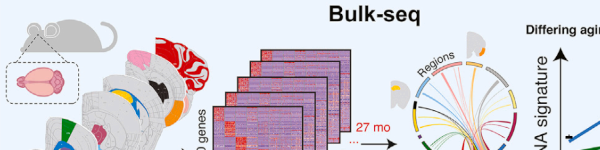 Atlas of the aging mouse brain reveals white matter as vulnerable foci
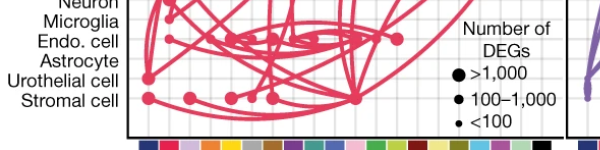 Single-cell Atlas of Parabiosis
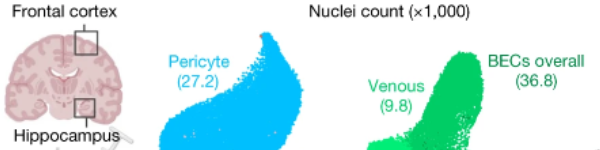 Human BBB Atlas
 Aging Plasma Proteome
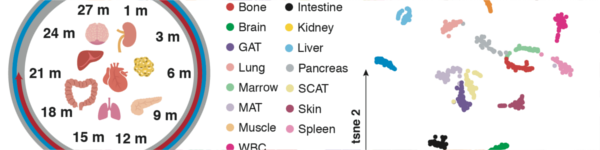 Tabula Muris Senis
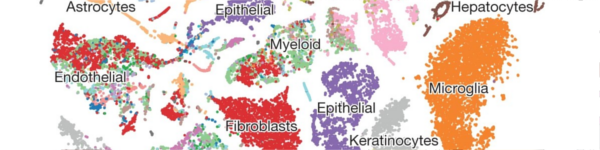 Tabula Muris
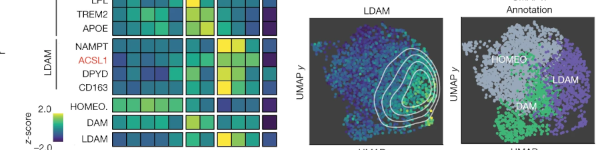 APOE4/4 is linked to damaging lipid droplets in Alzheimer’s disease microglia, Haney & Pálovics et al., Nature, 2024
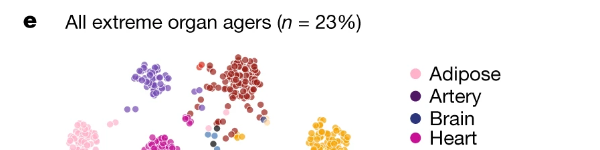 Organ aging signatures in the plasma proteome track health and disease, Oh & Rutledge et al., Nature, 2023
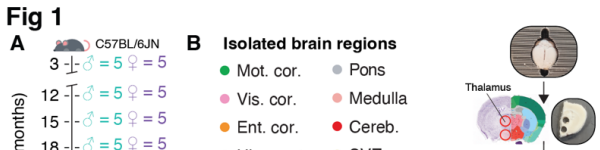 Atlas of the aging mouse brain reveals white matter as vulnerable foci, Hahn et al., Cell, 2023
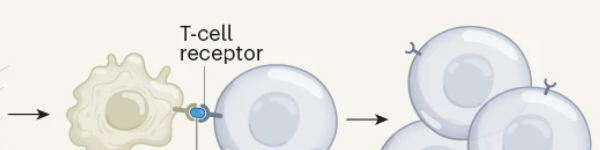 Activated immune cells drive neurodegeneration in an Alzheimer's model, Guldner et al., Nature, 2023
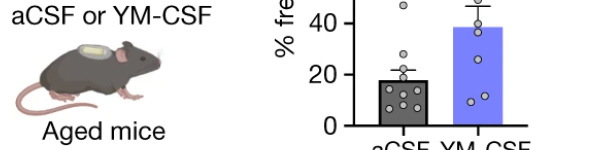 Young CSF restores oligodendrogenesis and memory in aged mice via Fgf17, Iram et al., Nature, 2022
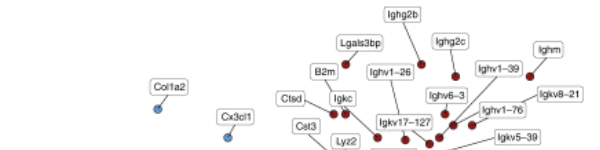 Limited proteolysis–mass spectrometry reveals aging-associated changes in cerebrospinal fluid protein abundances and structures, Shuken et al., Nature Aging, 2022
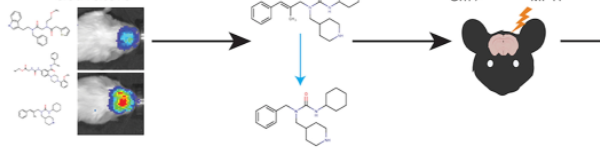 Small molecule C381 targets the lysosome to reduce inflammation and ameliorate disease in models of neurodegeneration, Vest et al., PNAS, 2022
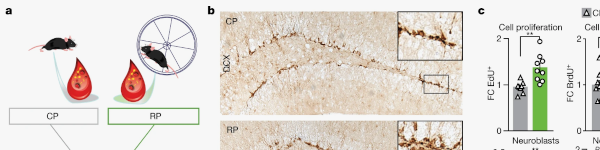 Exercise plasma boosts memory and dampens brain inflammation via clusterin, De Miguel et al., Nature, 2021
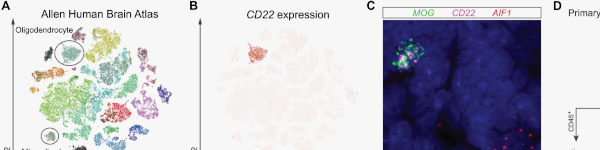 The CD22-IGF2R interaction is a therapeutic target for microglial lysosome dysfunction in Niemann-Pick type C, Pluvinage et al., Science Translational Medicine, 2021
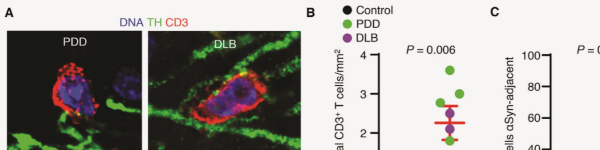 CD4+ T cells contribute to neurodegeneration in Lewy body dementia, Gate et al., Science, 2021
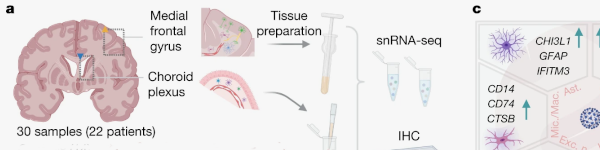 Dysregulation of brain and choroid plexus cell types in severe COVID-19, Yang et al., Nature, 2021
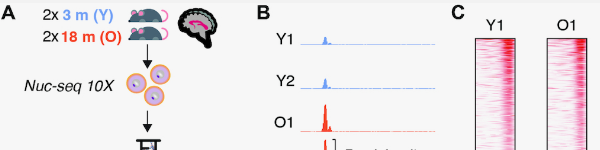 CoolMPS for robust sequencing of single-nuclear RNAs captured by droplet-based method, Hahn et al., Nucleic Acids Research, 2021
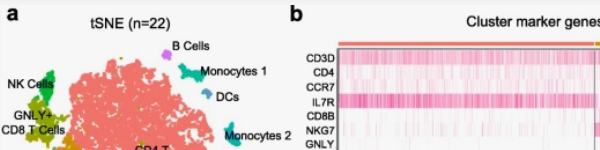 Methods to investigate intrathecal adaptive immunity in neurodegeneration, Oh et al., Molecular Neurodegeneration, 2021
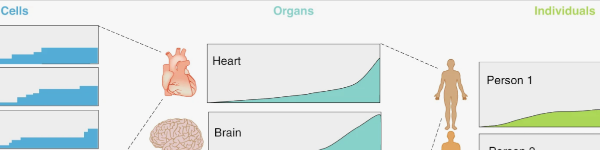 Asynchronous, contagious and digital aging, Rando et al., Nature Aging, 2021