Personnel
 |
Lauren IllaLauren is currently an undergraduate student in Stanford's Materials Science and Engineering Department. She is interested in using density functional theory (DFT) to study the lithium K-edge spectra of lithium compounds commonly found in battery materials. |
 |
Brandi RansomBrandi is currently a Ph.D. student at Stanford. Her current project focuses on the use of high-throughput ab initio calculations for materials discovery across biopolymer and Li-ion ceramic materials. |
 |
Eder LomeliEder is a PhD student in the Materials Science and Engineering department at Stanford. He uses DFT-based and statistical methods to study the stability of solid-state electrolytes, as well as cathode chemistry, in Li-ion batteries. |
 |
Malhar KuteMalhar is a PhD student in Materials Science and Engineering at Stanford. He is interested in using computational methods to study atomistic and quantum problems in energy and battery materials. |
 |
Emma CuddyEmma is currently a Ph.D. student in Stanford's Materials Science and Engineering Department. She is interested in using computational methods to study energy storage materials, particularly cathode battery materials. |
 |
Yi HuYi Hu is currently a Ph.D. student at Stanford. He is interested in oxygen redox reactions in cathode, lithium-ion battery anode and cathode materials, and computational techniques. |
 |
Vladimir CalveraVladimir is currently a PhD student in Stanford’s Physics Department co-advised by Steven Kivelson. He is interested in using analytical and numerical methods to study strongly correlated systems. He is currently using determinant Quantum Monte Carlo to study Hubbard-like models. |
 |
Sijia ZhaoSijia is currently a PhD student in Stanford’s Applied Physics Department, co-advised by Steven Kivelson, with interest in using analytical and numerical methods to study strongly correlated systems, including the use of Monte Carlo methods to study Hubbard-like models. |
 |
Sean HsuSean is a PhD student in Stanford’s Materials Science and Engineering Department, using density functional theory (DFT) and ab initio methods to investigate Sodium/Lithium ion battery cathode material properties. |
 |
Katherine DingKatherine Ding is currently a Ph.D. student in Applied Physics at Stanford University. Her current project involves using determinant quantum Monte Carlo simulations to study transport properties of correlated electron systems. |
 |
Fangze LiuFangze is currently a Ph.D. student at Stanford. She is studying numerical methods, such as determinant quantum Monte Carlo, to understand the physics of strongly correlated quantum systems. |
 |
Wen WangWen is currently a Ph.D student at Stanford. Her research interests are in numerical methods like determinant quantum Monte Carlo, and strongly correlated systems in condensed matter theory. |
 |
Ta TangTa is a Ph.D. student in the Applied Physics Department. He is generally interested in condensed matter theory and computation. Currently he is studying photon induced superconductivity by ED. |
 |
Emily BeenEmily is currently a Ph.D. student at Stanford. Her current project focuses on the use of electronic structure methods for understanding the composition and dynamics of energy storage materials, including charge and discharge structural and electronic dynamics of Li-ion battery anode and cathode compounds. |
 |
Jacob MarksJacob is a PhD student in Stanford's Physics Department. His current research applies time dependent Density Matrix Renormalization Group (tDMRG) and other numerical techniques to gain insight into behavior of strongly correlated quantum systems. More generally, he is interested in condensed matter theory and simulations, and connections to quantum computing. |
 |
Tianyi LiuTianyi is currently a Ph.D. student at Stanford. He is interested in numerical methods applied to strongly correlated systems in condensed matter theory. |
 |
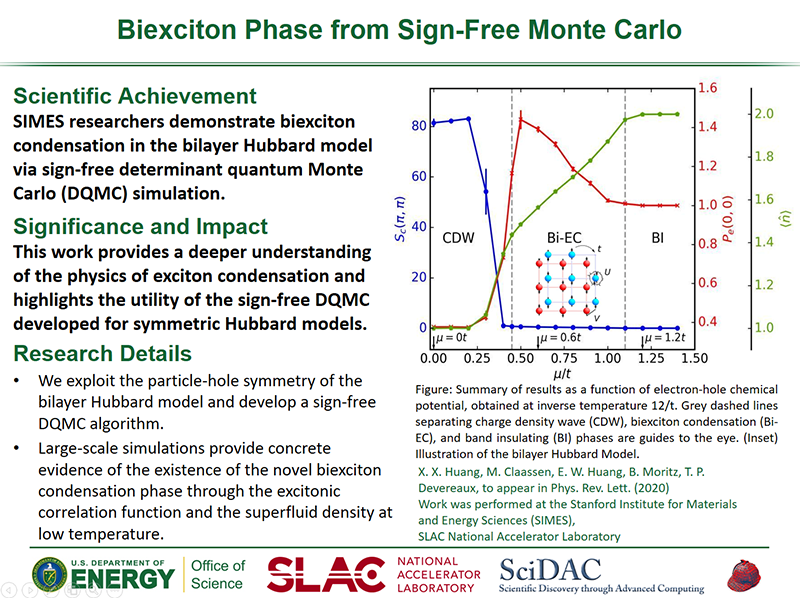
Xuxin HuangXuxin is currently a Ph.D. student at Stanford. She is studying sign-problem free variants of determinant quantum Monte Carlo for specific models, including those related to the formation and dynamics of excitons and exciton condensates in bilayer systems. Her interests are in numerical methods and strongly correlated systems in condensed matter theory. |
 |
Luhang YangLuhang is currently a postdoc at Stanford. She is interested in using numerical and analytical methods to study the physics in strongly correlated systems and quantum matter. |
 |
Zoe ZhuZoe is a Stanford Science Fellow. Her research focuses on studying strongly correlated states in layered van der Waals heterostructures by combining multiscale models and numerical techniques such as determinant quantum Monte Carlo. She is also broadly interested in the intersection between classical fluid systems and condensed matter physics. |
 |
Daniel JostDaniel is currently a post-doc at Stanford and a Feodor-Lynen Research Fellow of the Humboldt Foundation. An experimentalist by training, his research focus lies on the investigation of correlated electron systems using different spectroscopies, such as inelastic light and x-ray scattering. |
 |
Cheng PengCheng is currently a postdoc at Stanford. Her research interests mainly focus on developing numerical methods and applying them to study quantum magnetism in condensed matter materials, especially frustrated spin systems. She recently began focusing on the computational complexity of density matrix renormalization group (DMRG) methods in two-dimensional spin systems using entanglement entropy scaling theory. |
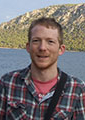 |
Yoni SchattnerYoni is currently a postdoc at Stanford. His interests are in correlated systems and quantum criticality in condensed matter theory. |
 |
Chunjing JiaChunjing is an Associate Staff Scientist at SLAC jointly appointed between TIMES, SSRL and LCLS. Her research interests mainly lie in the computational study of strongly correlated materials and materials for energy storage, combining ab initio methods and exact diagonalization techniques to simulate light scattering spectroscopies with materials specificity. CONTACT |
 |
Hongchen JiangHongchen is a Staff Scientist at SLAC in the Stanford Institute for Materials and Energy Sciences (SIMES). Hongchen's primary focus is the study of correlated materials and topological phases of matter using the density matrix renormalization group (DMRG) numerical technique. CONTACT |
 |
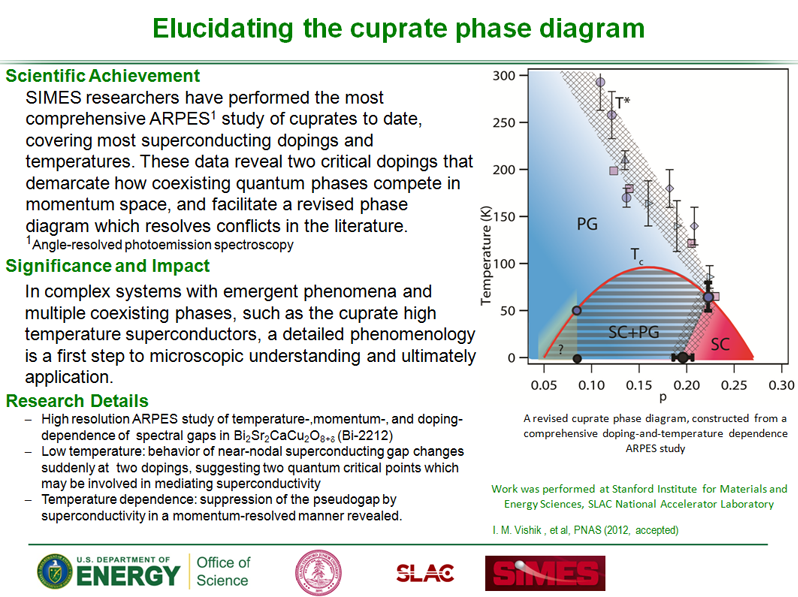
Brian MoritzBrian is a Staff Scientist at SLAC in the Stanford Institute for Materials and Energy Sciences (SIMES). Brian uses a variety of numerical techniques, including quantum Monte Carlo and exact diagonalization, to study models for strongly correlated materials. Using efficient, parallel algorithms to perform numerical simulations, results can be compared to data from angle-resolved photoemission spectroscopy (ARPES) and other X-ray spectroscopies (primarily XAS, XES, and RIXS). His recent focus includes understanding the nonequilibrium physics revealed by various types of pump-probe experiments, including those performed at the Linac Coherent Light Source (LCLS). WEBPAGE |
 |
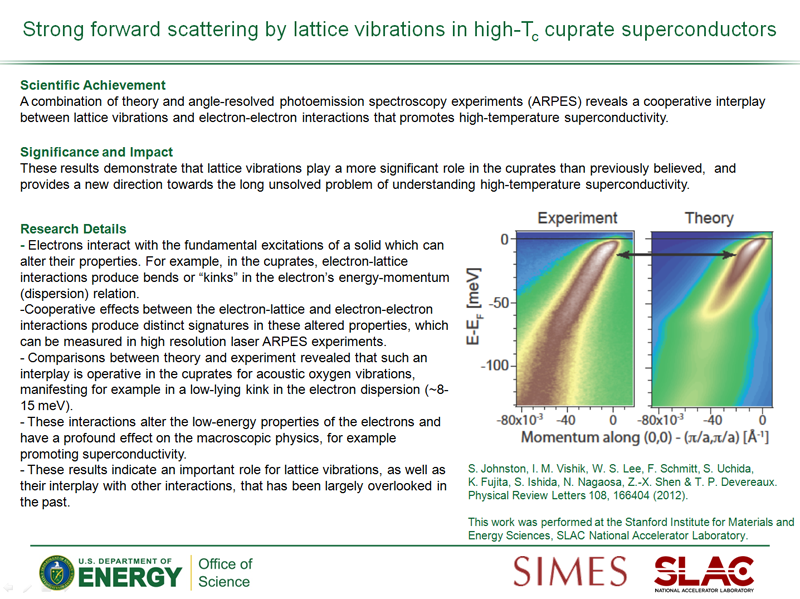
Thomas P. DevereauxProfessor Devereaux is a Professor of Materials Science and Engineering at Stanford University, Professor in the Photon Science Faculty at SLAC and Stanford University, and the former Director of the Stanford Institute for Materials and Energy Sciences (SIMES, the Materials Science Division at SLAC). His main research interests lie in the areas of theoretical condensed matter physics and computational physics. His research efforts focus on using the tools of computational physics to understand quantum materials and how spectroscopies can be used to fingerprint the influence of multiple degrees of freedom, interactions, and phases that lead to technologically relevant materials properties. "As the speed and cost of computing continues to improve, we are poised to tackle heretofore unaddressed problems, with the goal of understanding electron dynamics via a combination of analytical theory and numerical simulations to provide insight into materials of relevance to energy science." CONTACT |
Current and Frequent Visitors
 |
Giacomo Ghiringhelli
Area: Resonant Inelastic X-ray Scattering |
 |
Rudi Hackl
Area: Raman Scattering |
 |
Peter Hirschfeld
Area: Condensed Matter Theory |
 |
Zhongbing Huang
Area: Theory for Correlated Electrons |
 |
Arno Kampf
Area: Condensed Matter Theory |
 |
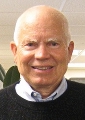
John J. Rehr
Area: FEFF and Theory of Spectroscopy |
 |
Doug Scalapino
Area: Condensed Matter Theory |
 |
Jeroen van den Brink
Area: Theories of Resonant Inelastic X-ray Scattering |
 |
Jan Zaanen
Area: Theoretical Condensed Matter Physics |
Former Members of Devereaux Group
 |
Sri Chaitanya Das PemmarajuFormerly: Staff
Scientist |
 |
Iwnetim (Tim) Iwnetu AbateFormerly: Graduate Student |
 |
Michael SchülerFormerly: Research Assocaite |
 |
Yifan JiangFormerly: Research Associate |
 |
Idris BoukahilFormerly: Graduate Student |
 |
Ilkyu LeeFormerly: Graduate Student |
 |
Ben NosarzewskiFormerly: Graduate Student |
 |
Yuan ChenFormerly: Graduate Student |
 |
Edwin HuangFormerly: Graduate Student |
 |
Ting CaoFormerly: GLAM Fellow |
 |
Rongyang SunFormerly: Visiting Student |
 |
Harrison RuizFormerly: Graduate Student |
 |
Lavi BlumbergFormerly: Graduate Student |
 |
Ryan SheppardFormerly: Undergraduate Student |
 |
Yvonne Kung
Formerly: Research Associate |
 |
Martin Claassen
Formerly: Graduate Student |
 |
Yao Wang
Formerly: Graduate Student |
 |
Christian Mendl
Formerly: Research Associate |
 |
Nachum Plonka
Formerly: Graduate Student |
 |
Kai Wu
Formerly: Research Associate |
 |
Shenxiu Liu
Formerly: Graduate Student |
 |
Krzysztof Wohlfeld
Formerly: Research Associate |
 |
Clement Bazin
Formerly: Visiting Diploma Student, EPFL |
 |
L. Andrew Wray
Formerly: Research Associate |
 |
Michael Sentef
Formerly: Research Associate |
 |
Chenliang Li
Formerly: Visiting Scientist, SIMES |
 |
Thomas Böhm
Formerly: Visiting Student |
 |
Nandan Pakhira
Formerly: Visiting Scientist |
 |
Elizabeth Nowadnick
Formerly: Graduate Student |
 |
Alexander "Lex" Kemper
Formerly: Research Associate |
 |
Cheng-Chien Chen
Formerly: Research Associate |
 |
Adam Sorini
Formerly: Post-Doc |
 |
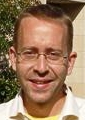
Steve Johnston
Formerly: Graduate Student |
 |
Patrick Kirchmann
Formerly: Research Associate |
 |
Saahil Shenoy
Formerly: Graduate Student |
 |
Katherine Luna
Formerly: Graduate Student |
 |
Francois Vernay
Formerly: Post-Doc |
 |
Aden Seaman
Formerly: Graduate Student |
 |
Cedric Beny
Formerly: Graduate Student |
 |
Matthew Enjalran
Formerly: Post-Doc |
 |
Homayoun Moraghebi
Formerly: Post-Doc |
 |
Matthew Palmer
Formerly: Graduate Student |
 |
Francesca Venturini
Formerly: Graduate Student |
 |
Umberto Michelucci
Formerly: Graduate Student |