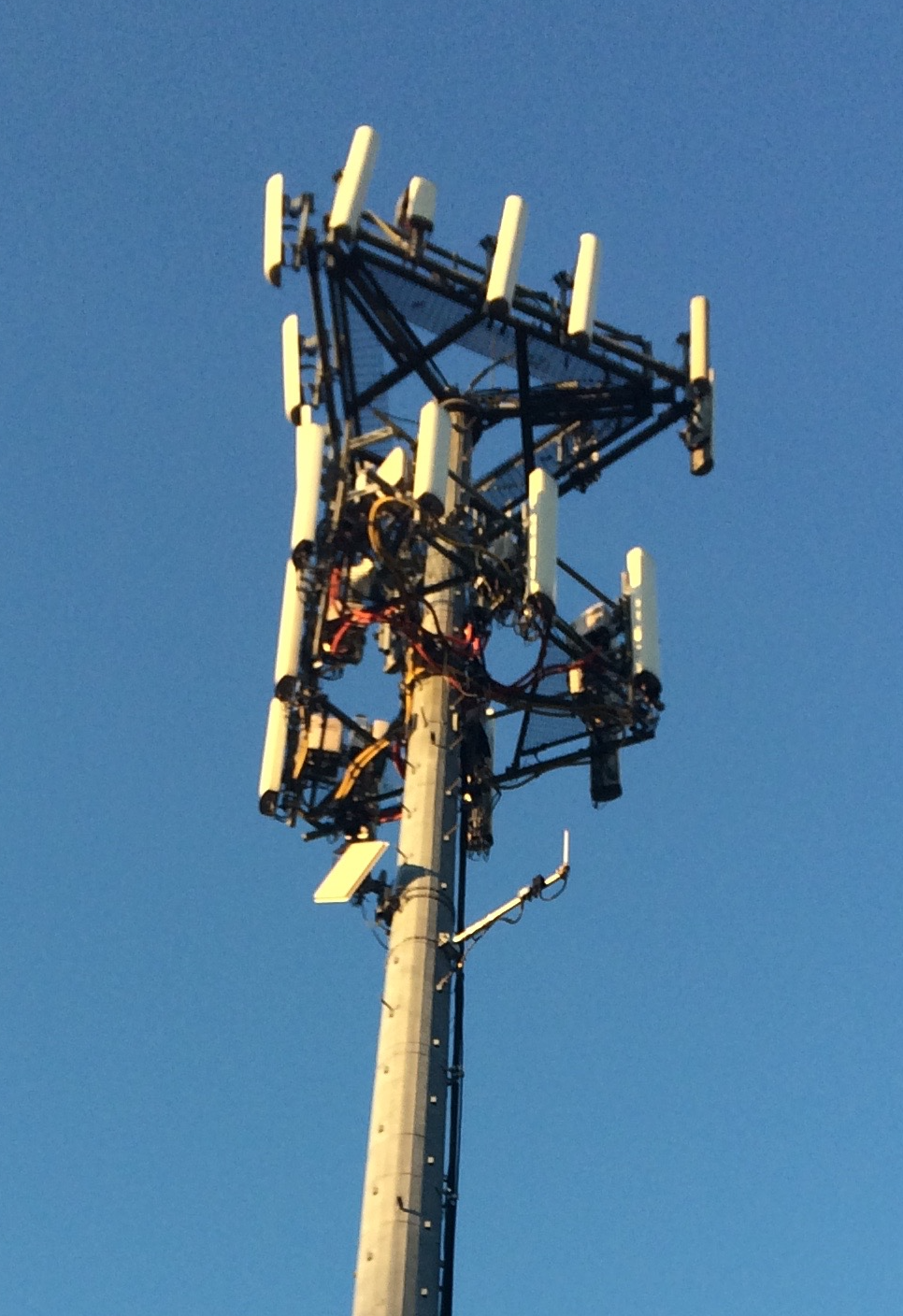
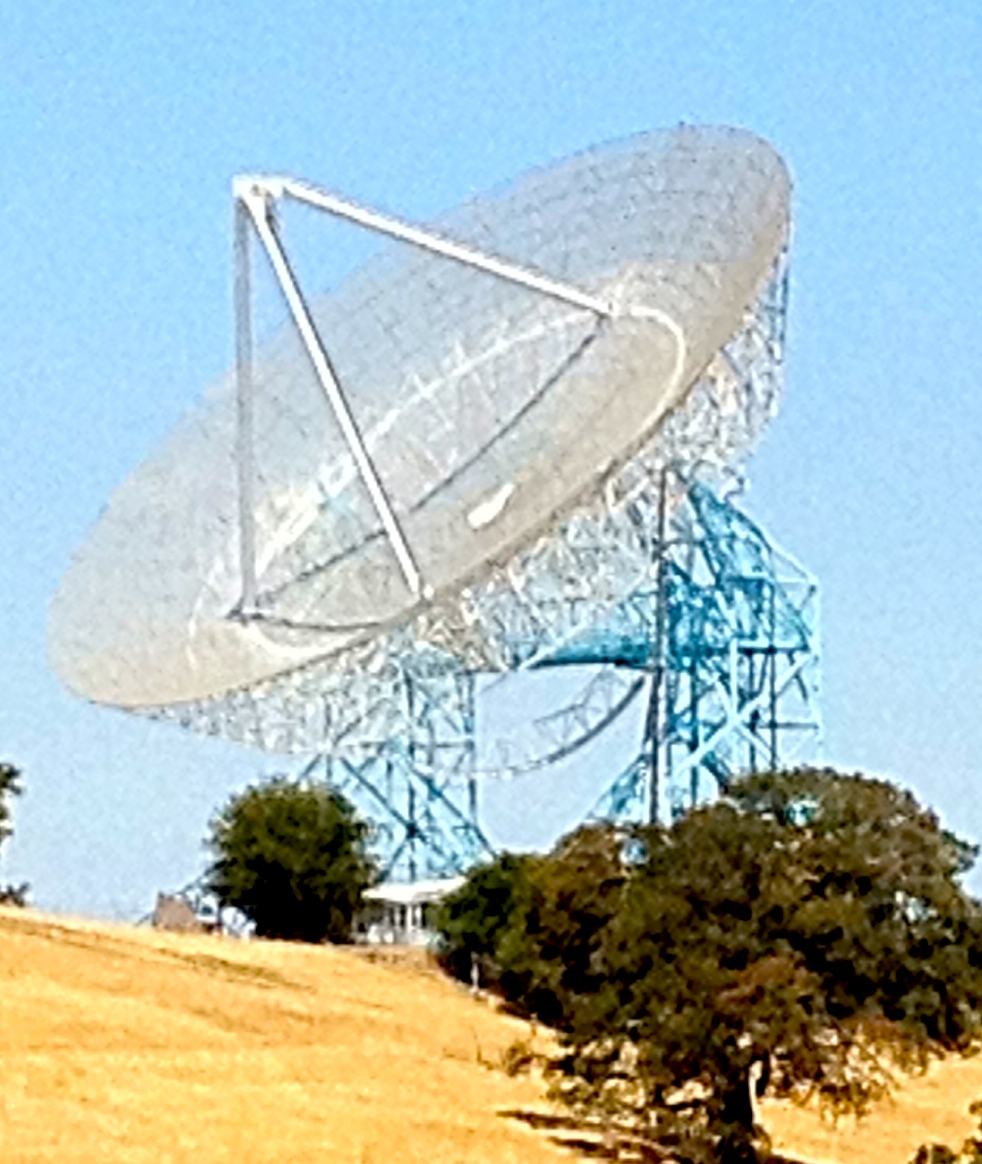
This class covers communication system design and performance analysis. Topics include current communication systems (cellular, WLANs, radio and TV broadcasting, satellites, Internet), Fourier techniques, energy and power spectral density, random variables and random (noise) signals, filtering and modulation of noise, analog modulation (AM and FM) and its performance in noise, digital modulation (PSK and FSK), optimal receiver design, and probability of bit error for digital modulation.
Basic Course Information
Class Time and Location:
MW 11-12:15, McCullough 126.
Instructor: Andrea Goldsmith, Packard 371, andrea@ee.stanford.edu, 650-725-6932.
Office Hours: MW 10-11 and by appointment.
Teaching Assistant: Hao Zou, haozou@stanford.edu.
Office Hours: Tuesday 7-8pm and Thursday 9:00-9:50am @ Packard 107. Email Office Hour: Wednesday 9-10pm.
Administrator: Pat Oshiro,
365 Packard, poshiro@stanford, 650-723-2681.
Homework pickup/dropoff: Th 4pm.
Grader: Seyed Reza Mir Ghaderi (Reza), rezam@stanford.edu.
Discussion Session: Tuesday 6-7pm, Bldg. 60, RM 118.
Prerequisites: EE102a (or equivalent).
Grading: Homeworks: 30%, Midterm Exam: 30%, Final Exam: 40%.
Homeworks can be collaborative.
Detailed Course Information (Updated on 04/17/09)
Homework Policy: Homeworks will be assigned on Wednesday, and will be due by 4 pm sharp in
Pat’s office (Packard 365) the following Thursday. Homeworks will lose 25% credit per day late. Your lowest homework
grade will be dropped. Up to three students can collaborate on each homework and turn in one writeup.
Collaboration requires that all involved students work out each and every problem. This can be done
by working out the problems together, or each student can work out the problems individually and then
compare and discuss their work to arrive at a final solution. It is not permitted on any homework
for collaborators to divide up the problems, or for one person to work out a problem or problems and the
others “check the work”.
#1. [04/02]: We will have our makeup lecture on Friday April 3, in Hewlett 103 (with a pizza lunch). The Hewlett teaching center is right across from Packard Electrical Engineering building, see the map at:
http://campus-map.stanford.edu/index.cfm?ID=04-510
#2. [04/06]: The lecture room for EE 179 has been changed to McCullough 126.
#3. [04/15]: The discussion session next Tuesday (April 21) is rescheduled to Sunday 3-4pm @ Packard 339.
#4. [05/04]: The Midterm Review session is scheduled to be on May 7 (Thursday) 6-7pm @ Packard 036. Additional Office Hours will be hold following the midterm review session on May 7 from 7-8pm @Packard 036, on May 9 (Saturday) 3-5pm @Packard 107, and by appointment on May 10 (Sunday) afternoon (please email requests by Saturday midnight).
#5 [05/05] Midterm is scheduled to be on May 11 (Monday) from 11:00 am to 12:30 pm at Herrin Hall (Biology, 393 Serra Mall), Room 185 (2 buildings down from Gates, 44 seats). See map at http://campus-map.stanford.edu/index.cfm?ID=07-410.
#6 [06/04] Final Exam is scheduled to be on June 9 (Tuesday) from 8:30 am to 11:30 am at Sloan Mathematics Ctr (Math Corner) Building 380, Room 380X, 450 Serra Mall (next to Sequoia Hall). See map at http://campus-map.stanford.edu/index.cfm?ID=01-380.
Lecture 1: Introduction and Communication Systems Today
Required Reading: None
Lecture Slides
Lecture Summary
Lecture 2: Fundamentals of Communication Systems
Required Reading: Chapter 1
Lecture Slides
Lecture Summary
Lecture 3: Fourier Series and Periodic Signals
Required Reading: Chapter 2.1-2.3
Lecture Slides
Lecture Summary
Lecture 4: Fourier Series and Transforms Review
Required Reading: Appendix 2,4; Chapter 2.4-2.7
Lecture Slides
Lecture Summary
Handout with Fourier Series Properties and Proofs
Fourier Series website
Fourier Transforms website
Lecture 5: Energy/Power Spectral Density and Autocorrelation.
Required Reading: Chapter 2.8-2.9; Appendix 6.
Lecture Slides
Lecture Summary
Lecture 6: Random Signals, Probability Theory
and Random Variables.
Required Reading: Chapter 8.1-8.3
Lecture Slides
Lecture Summary
Lecture 7: Random Variables I.
Required Reading: 8.6-8.8
Lecture Slides
Lecture Summary
Lecture 8: Random Variable II.
Required Reading: 8.9
Lecture Slides
Lecture Summary
Lecture 9: Random Processes, WSS Processes, PSD, Filtering/Modulation, Gaussian Processes.
Required Reading: No additional reading.
Lecture Slides
Lecture Summary
Lecture 10: Conditional Probability, Independence, Random Variables,
expectations.
Required Reading: 8.1-8.2
Lecture Slides
Lecture Summary
Lecture 11: Midterm Review, Introduction to Modulation, AM Modulation.
Required Reading: Review Chapter 1, 2, 8 and Appendixes
Lecture Slides
Lecture Summary
Lecture 12: AM Modulation.
Required Reading: 3.1-3.4
Lecture Slides
Lecture Summary
Lecture 13: DSBSC, Coherent Dection, SSB, and VSB.
Required Reading: 3.5-3.7
Lecture Slides
Lecture Summary
Lecture 14: SSB,BB Representations, VSB, Superheterodyne RXs, Introduction to FM
Required Reading: 3.8-3.10, 4.1-4.3
Lecture Slides
Lecture Summary
Lecture 15: FM Modulation.
Required Reading: 4.5-4.10, 9.1-9.6
Lecture Slides
Lecture Summary
Lecture 16: FM Detection. Digital Modulation.
Required Reading: 7.1-7.5
Lecture Slides
Lecture Summary
Lecture 17: Error Probability for Digital Modulation
Required Reading: 10.1-10.6
Lecture Slides
Lecture Summary
Lecture 18:
Bonus Review Lecture .
Required Reading: None
Lecture Slides